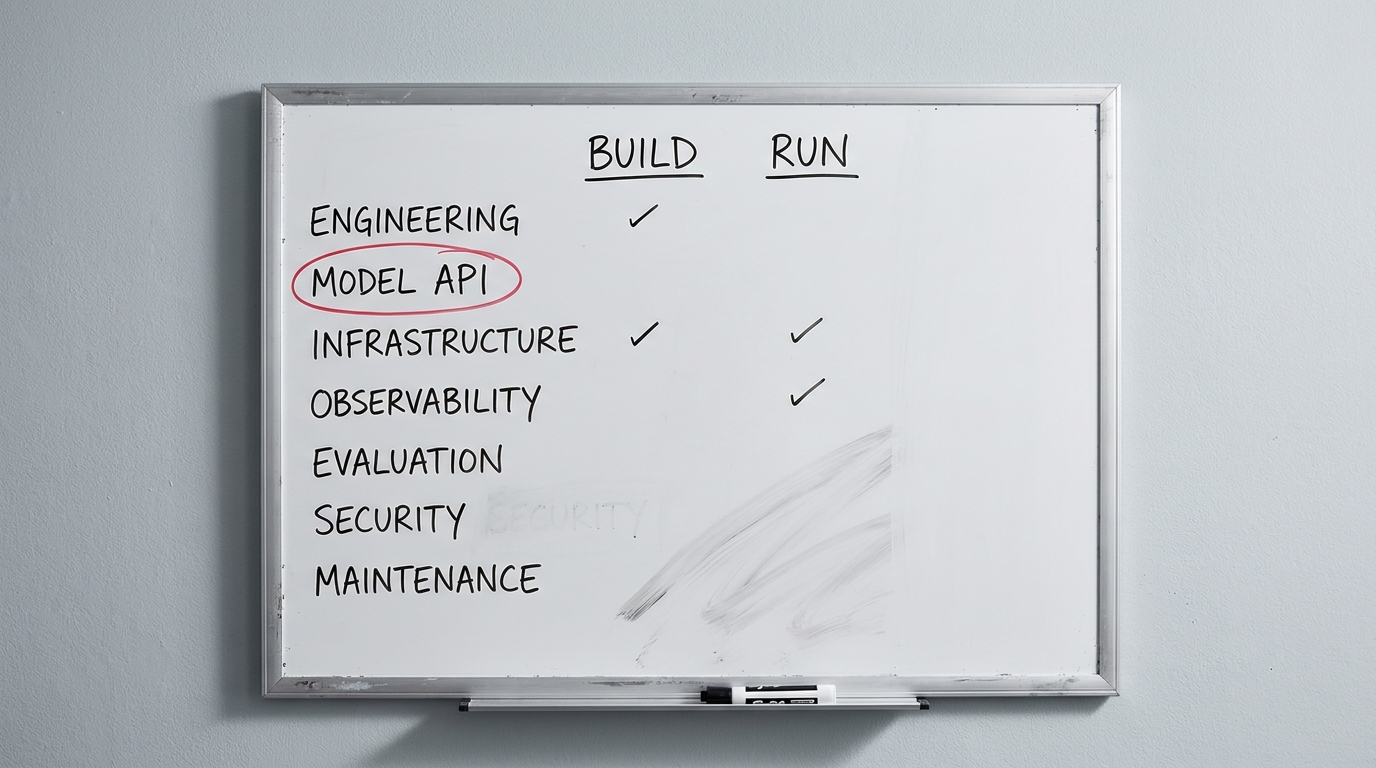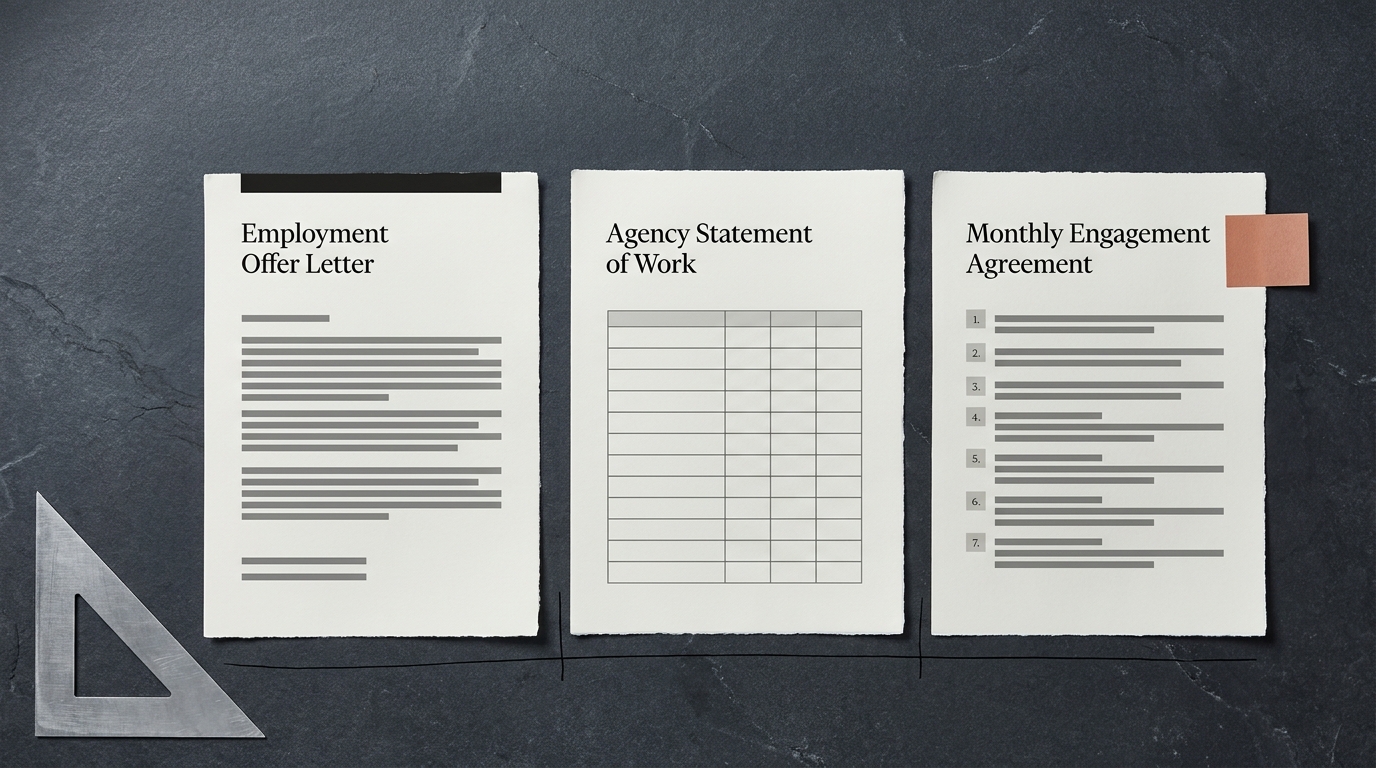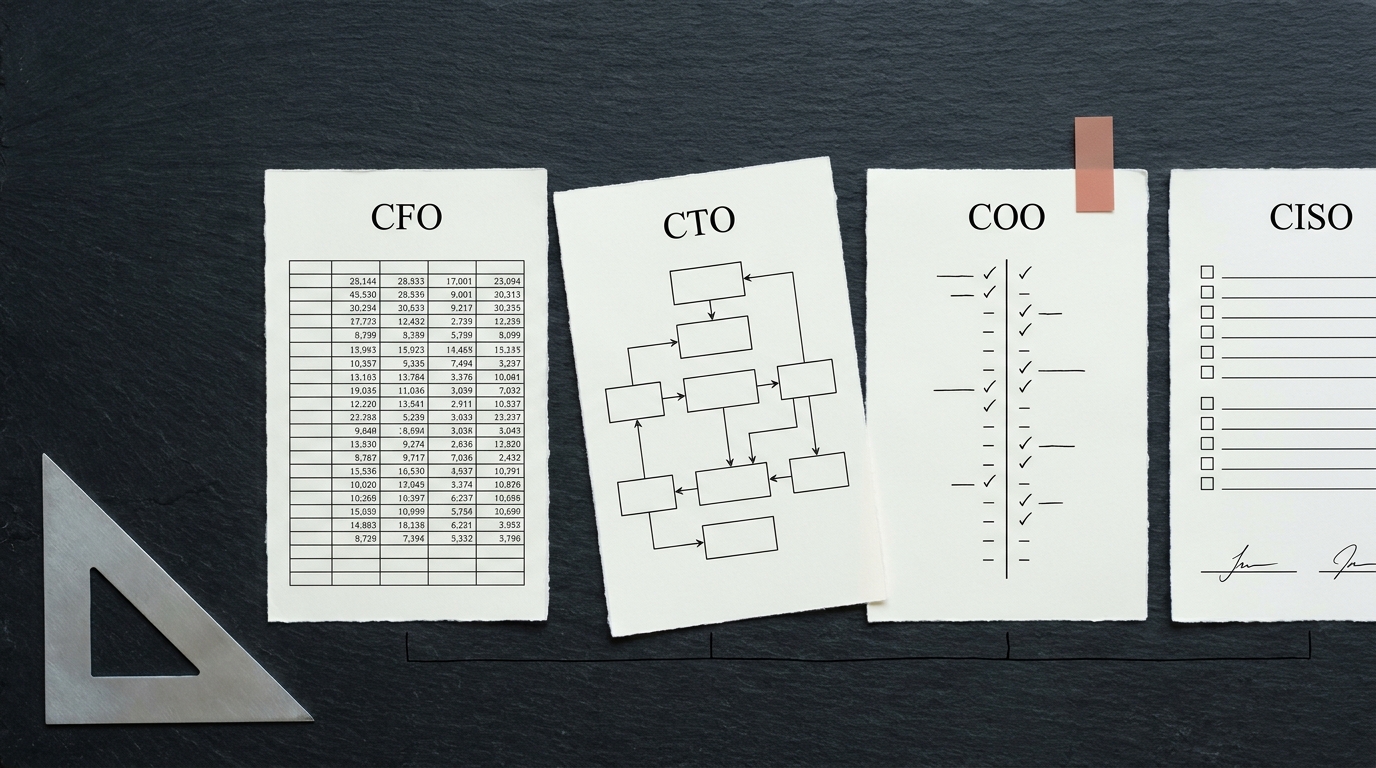

The demo landed. A model that read support tickets and drafted replies, running live in a Friday all-hands, got a round of applause and a "ship it." Six months later that same model was still running in a notebook on one engineer's laptop, still drafting replies nobody sent, still waiting on the data access, the review workflow , and the monitoring that turn a clever prototype into something a business can actually lean on. Nothing about the model was wrong. Everything about the path to production was missing.
That gap is the entire job. AI implementation consulting is the work of closing it: taking a proof of concept that impressed a room and turning it into a system that runs in production, integrates with the tools your team already uses, and keeps working after the people who built it move on. It is not a strategy deck, and it is not a pilot. It is the unglamorous, decisive middle - architecture, pipelines, integration, deployment, and the operational discipline that keeps a model honest once real users depend on it.
If your pilots keep stalling in exactly that spot, the fastest way to find out what is actually blocking production is a short diagnostic. Get an AI Readiness Snapshot - a free 30-minute readiness call that maps where your AI work is stuck and what it would take to move it.
What AI implementation consulting actually is
AI implementation consulting designs, builds, integrates, and operates AI systems inside your existing environment, so a proven idea becomes a production capability rather than a permanent experiment.
The distinction that matters most is against strategy-only consulting. A strategy engagement produces recommendations: where AI could help, which use cases to prioritize, what the market is doing. Useful, but it stops at the point where the hard part begins. An implementation partner picks up from a decision - or from a pilot that already works - and owns the delivery: the solution architecture, the data plumbing, the integration into your stack, the deployment to production, and the monitoring that catches drift before your customers do .
Put plainly: a strategy firm hands you a plan, an implementation partner hands you a working system and the ability to run it. The reason this category exists at all is that most organizations get stuck between the two. McKinsey's State of AI (2025) found that a large majority of companies have adopted AI in at least one function while only a minority have scaled it beyond pilots (figures reported as broad ranges). The adoption problem is largely solved. The production problem is not, and closing it is the whole point of this work.
What you get: the deliverables
An implementation engagement should produce artifacts you can point to, not a relationship you have to keep paying to interpret. The concrete deliverables typically include:

- An AI opportunity and readiness assessment - a clear-eyed read on which use cases are viable now, what your data and infrastructure can support, and where the real blockers sit.
- An implementation roadmap - the sequence of work from current state to a running production system, with dependencies and decision points named rather than hidden.
- Solution architecture - the design for how models, data, and services fit together, including the choices around build-versus-buy, model selection, and where inference runs.
- Data pipelines and integration - the connective work that feeds the system reliable data and wires its outputs into the applications your team already uses, instead of a standalone tool nobody opens.
- Production deployment - the actual release to a live environment, with the access controls, versioning, and rollback paths a real system needs.
- Monitoring and observability - dashboards and alerting for model quality, latency, cost, and drift, so degradation is caught early rather than discovered by a customer complaint.
- Team enablement - the documentation, runbooks, and knowledge transfer that let your people operate and extend the system without the original builders in the room.
Not every engagement includes all seven, and a good partner will tell you which ones your situation actually needs. The test is simple: the output is a capability your organization owns, not a dependency it rents.
How we work: the implementation phases
Delivery works best as a small number of named phases, each with a clear exit before the next begins. This is the structure that turns "we're doing AI" into a schedule someone can hold you to.

- Readiness assessment. Before writing code, establish what is real: the state of your data, the integration surface, the compliance constraints, and the specific outcome the system has to produce. This phase ends with a go or no-go on scope, not a vague sense of optimism.
- Roadmap and architecture. Translate the target outcome into a technical design and a sequenced plan. Decide the architecture, the model approach, and the build order. This phase ends with a design your engineers and ours both agree can be built.
- Build and integrate. The core construction: pipelines, model integration, and the connective tissue into your existing stack. Work is delivered in increments you can see and test, not a big-bang reveal at the end.
- Deploy to production. Release to a live environment with the guardrails a production system requires - access control, monitoring hooks, versioning, and a rollback path. This phase ends when real users or real workloads are running against the system.
- Operate, monitor, and enable. The phase most competitors skip, and the one that decides whether any of the earlier work mattered. Watch the system in production, tune it, respond to drift, and transfer operational ownership to your team. This is where a pilot finally becomes something the business can depend on.
The phased structure exists so you always know what you paid for and what comes next. Once a readiness assessment has confirmed the path, the natural next step is a focused discovery sprint to lock the architecture and roadmap. Book a Discovery Sprint to turn a confirmed opportunity into a build-ready plan.
Why most AI pilots never reach production
The pattern holds across the industry, and the large consultancies publishing on it keep landing on the same causes. Pilots stall not because the model was wrong, but because the work around the model never got done. Four failure points keep showing up.
- The workflow was never redesigned. The pilot bolted a model onto the existing process instead of rethinking it. The old steps remain, the model turns into an awkward extra click, and adoption quietly dies.
- The data was not production-ready. A curated sample makes a demo look sharp. Real data is messy, permissioned, and always shifting, and the pilot has no pipeline to cope with it.
- Governance was an afterthought. Nobody defined who reviews outputs, how errors get caught, or what happens when the model is wrong. Security and compliance flag the project late and it grinds to a halt.
- The skills gap was ignored. The pilot ran on a vendor's demo team or one internal champion. When it is time to scale, nobody on staff can maintain or improve it.
None of these are model problems. They are operating problems, and they are precisely the work that gets skipped when a project is treated as a technology experiment rather than a change to how work gets done. This is where an implementation partner earns its keep and where an advisory deck runs out of road.
Redesign the workflow, do not bolt on a tool
The most reliable predictor of whether an AI project reaches production is whether the workflow got reimagined or merely decorated. Bolt a model onto an unchanged process and it almost always fails, because that process was built for humans doing every step, and the model ends up as friction instead of leverage.
Take a support team that wants AI to draft responses. The bolt-on version adds a "generate draft" button to the existing ticket tool. Agents still triage, still research, still copy and paste, and now they also edit AI text they never asked for. Handling time barely moves and the button sits unused within a month.
The redesigned version starts from a different question: what should this workflow be if the model is doing the drafting? Now the system reads the ticket, pulls the relevant account history and knowledge-base articles, drafts a response, and routes only low-confidence cases to a human. The agent's job shifts from writing to reviewing and handling exceptions, and every human correction feeds back as a signal that sharpens the next draft. That is a genuinely different workflow, not the old one with a model taped to the side, and it is the version that survives contact with production.
Getting there is design work, not prompt tuning. It is the part strategy decks gesture at and implementation actually builds.
How to pick the first use case
The most common buyer question is some version of "which use case do I start with." The honest answer is a short test rather than a long framework. A first use case should clear four bars.
- It touches a metric you already report. If you cannot name the number it moves — cost per ticket, forecast error, cycle time — it is a science project, not a business case.
- The data already exists and is reachable. A use case needing a six-month data cleanup is a second project wearing the costume of a first one.
- A human can check the output. Early production AI works best where a person stays in the loop and can catch a wrong answer cheaply.
- The workflow owner wants it. Adoption is decided by the team whose work changes. Start where they are pulling, not where you are pushing.
Picking the wrong first use case is the most expensive mistake in the whole program, because a stalled flagship poisons the appetite for the next one.
Measuring ROI on an implementation
A system you cannot measure is a system you cannot defend at the next budget review. Success gets measured the way any operational investment does, against a baseline set before the build starts.
The metrics that matter fall into four buckets: cost (hours saved, headcount avoided, lower cost per transaction), reliability (fewer errors, higher consistency than the manual process), cycle time (how much faster the work moves end to end), and revenue (conversion, retention, or throughput the system directly influences). Which one applies depends on the use case. What does not change is that you pick it before you build, so the result is a number rather than a story.
Being honest about ranges matters here too. Early returns are estimates until the system has run against real volume for a full cycle. Any consultant quoting a precise ROI figure before deployment is selling, not measuring.
Governance and the talent gap are part of the work, not add-ons
Two things routinely get scoped out of an implementation and then sink it.
Governance, security, and change management. Who reviews outputs, how errors are caught, what happens on a wrong answer, who can reach which data, and how the affected team is brought along. Treated as a phase-two concern, these arrive as a late blocker from security or compliance. Treated as part of the build, they are what makes the system deployable at all.
The skills gap. A pilot maintained by a vendor's demo team is not a capability. An implementation that ends without internal owners trained to operate and extend the system has produced a dependency, not an asset. If hiring a permanent AI team is not realistic on your timeline, an embedded team that builds alongside your staff and hands over knowledge is the shape that leaves you with something you own.
Best for, and not for
Honesty about fit saves everyone time, so here is the plain version. This service is a strong match for some situations and the wrong tool for others.
Best for:
- Teams with one or more pilots that work in a demo but will not scale to production.
- Organizations missing in-house AI, ML, or MLOps talent - where the ideas exist but the delivery muscle does not.
- Regulated or high-stakes environments that need production rigor: monitoring, auditability, and controlled deployment rather than a quick script.
- Companies that have decided to invest in AI and want a partner accountable for a working outcome, not just advice.
Not for:
- Teams that only need a one-off strategy deck or a market scan - a strategy-only firm is a better and cheaper fit.
- Organizations with no data foundation yet. If the underlying data is not accessible or trustworthy, the honest first step is readiness work, not a build. If that is you, start with a readiness assessment and come back when the foundation is in place.
For teams whose real gap is talent rather than a single project, an embedded model often fits better than a fixed-scope build. A fractional agentic team closes the AI talent gap by working inside your organization without the cost and lead time of permanent hires.
Typical timeline
Timelines vary with data readiness and integration complexity, so treat any number as a range rather than a promise. As a rough band, a first production system commonly takes on the order of 12 to 16 weeks from kickoff, assuming the data is reasonably accessible and the integration surface is well understood. Simpler, well-scoped systems can move faster. Engagements that have to fix a data foundation first, or integrate across many legacy systems, will run longer.
The variable that moves the timeline most is rarely the model. It is the state of the data and the number of systems the AI has to touch. A partner who quotes a firm date before seeing your data is guessing. A real estimate comes after the readiness assessment, not before it.
How engagements are scoped and priced
Cost transparency is rare in this market, which is exactly why it is worth being direct about it. AI implementation engagements are priced against a handful of drivers:
- Scope - a single production use case costs far less than a multi-system program.
- Data readiness - clean, accessible data lowers cost, and a foundation that needs building raises it.
- Integration complexity - the number and age of the systems the AI must connect to.
- Operate versus build - a one-time build is priced differently from an ongoing operate-and-monitor arrangement.
Engagements are usually structured either as a fixed-scope project (a defined system delivered to production) or as a retained, embedded arrangement (a team working alongside yours over time). Market rates for AI consulting vary widely by firm and region - published analyses put them across a broad band, so any specific figure should carry a source and a date rather than be treated as a standard (labeled estimate, drawn from published rate surveys such as Alice Labs' 2026 AI consulting pricing analysis). Rather than quote a number that would not survive contact with your actual scope, a good partner scopes and prices against the readiness assessment. If you want a real figure for your situation, a scoping conversation will get you one faster than any pricing page.
Proof: what production actually looks like
Proof in this field is not a logo wall. It is evidence that a system runs in production and keeps running. The credible markers to look for - in a partner, and in your own results - are concrete:

- A system in production, not a pilot. Ask to see or hear about work that reached live users and stayed there, with the monitoring to show it held up.
- Operational metrics that persist. Latency, quality, and cost tracked over time, not a single benchmark from launch week. Where specific client numbers are not shareable, look for described, observed improvements rather than round-number claims.
- A clean handoff. The strongest proof is a client team that now operates the system itself. A partner whose systems collapse without them has not finished the job.
The honest framing here matters, and it cuts toward us too: be wary of any firm, including this one, that offers precise client metrics it cannot source or a customer name it cannot verify. Reliable proof is specific about what was built and deployed, and careful about numbers it cannot stand behind. That discipline is itself a preview of how the production work will be done.
Questions to ask before choosing an AI implementation partner
The right questions surface the difference between a strategy vendor in implementation clothing and a partner who ships. Before you sign anything, ask:
- Do you deploy to production, or stop at strategy? The single most clarifying question. Get a straight answer.
- How do you handle data readiness? A partner who assumes your data is fine has not done this before.
- What does "operate" include, and for how long? Monitoring, tuning, and drift response are where systems live or die.
- Who owns the system at the end? The goal is your team running it, not a permanent dependency.
- How do you measure success? Look for production metrics and business outcomes, not model-accuracy numbers in isolation.
- What happens when the model degrades? Every production system drifts. Ask how they will know and what they will do.
The answers tell you quickly whether a firm builds and runs systems or only advises on them.
Move your pilots into production
The distance between a working pilot and a production system is where most AI investment quietly stalls. Closing it is a specific, deliverable job - architecture, integration, deployment, and the operational discipline to keep a system honest once real work depends on it.
If you have AI pilots that impressed the room and then went nowhere, that gap is closable, and the first step is small. Get an AI Readiness Snapshot - a free 30-minute call that maps what is blocking production and what it would take to ship.