
A finance team can usually tell you, to the dollar, what every software license in the stack costs and which seats nobody logged into last quarter. Ask the same team which of its live AI workflows actually earned their keep, and the room goes quiet. The spend is precise. The return, workflow by workflow, is a story people tell in slides.
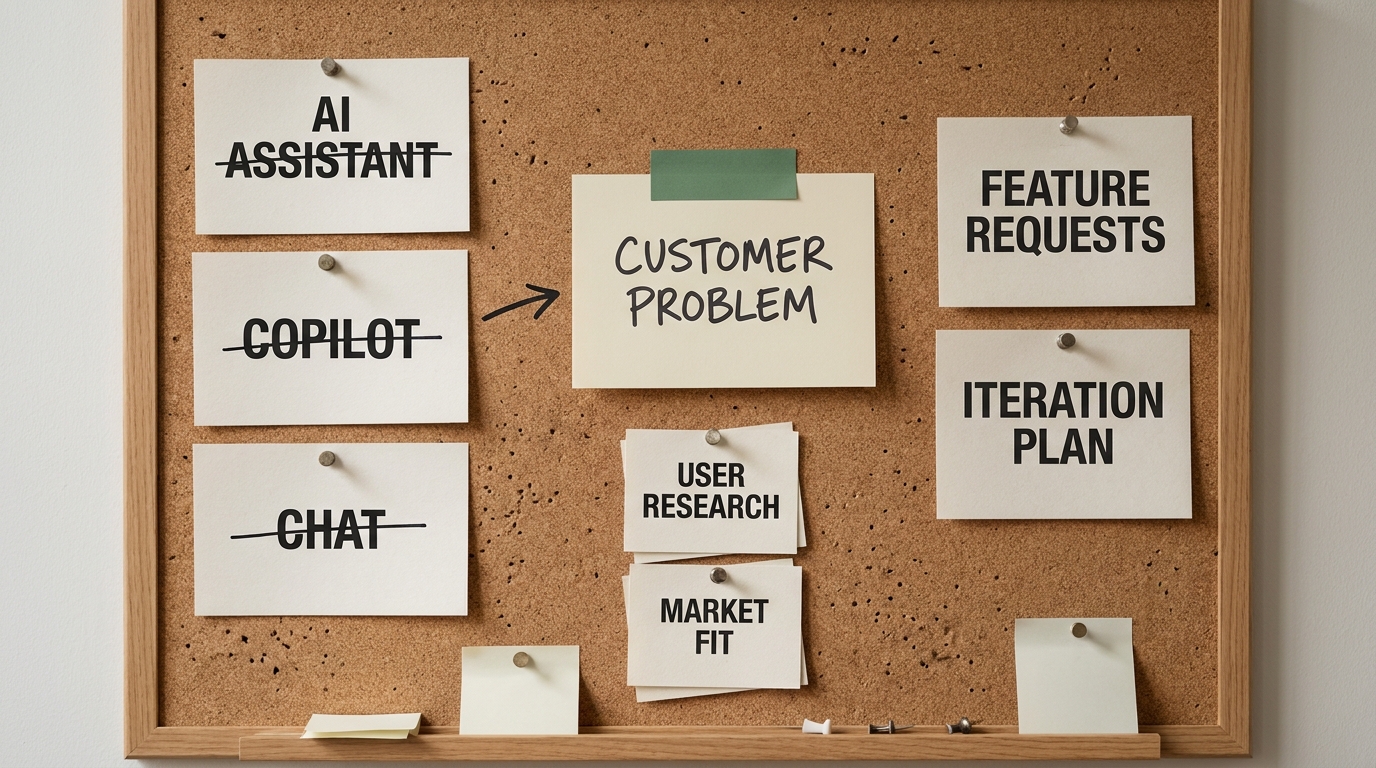
That silence is the whole problem. Most AI portfolios are built to add and never to subtract. A workflow gets championed, shipped, and celebrated, and then it just keeps running, because turning something off feels like admitting it was a mistake. The strongest AI teams work the other way around. They scale the workflows that clear a return bar, and they shut the rest off on purpose. Scaling is the half everyone talks about. Retiring is the half that tells a disciplined operation apart from a hype-driven one, and it runs on a simple loop: Define, Apply, Measure, Scale, Retire.
Quick answer: Disciplined teams run every AI workflow through a five-step loop. Define the value and the bar, Apply it in a real workflow, Measure the result against that pre-set bar, Scale what clears it, and Retire what does not. The differentiator is the last step: strong teams shut weak workflows off instead of letting them run on inertia.
The half of AI ROI nobody talks about
Walk any mature AI portfolio and the same pattern repeats. There are a few clear winners everyone can point to. Then there is a long tail of workflows that nobody owns , nobody measures, and nobody will quite admit are underperforming. They eat model spend, engineering attention, and the trust of the people who have to use them, and they return something between "a little" and "we are not sure."
The reason the tail grows is structural, not lazy. According to Rize, roughly 67% of enterprises estimate AI ROI rather than measure it, citing reporting from InformationWeek and ModelOp on the "AI value illusion": spending gets tracked, returns get guessed. When return is a guess, no workflow ever clearly fails. And a workflow that never clearly fails never gets shut off. That is the trap, stated plainly. Guessed returns are a one-way ratchet that only adds.
Two biases hold the ratchet in place. The first is sunk cost: a team spent a quarter building something, so killing it feels like burning that quarter. The second is champion bias: a senior person sponsored the workflow, and nobody wants to be the one who says their idea is not paying off. Both are emotional. Both are expensive. A healthy portfolio looks like the inverse, where every live workflow has cleared a stated bar and every one of them gets re-checked on a schedule. Nothing runs on inertia.
The ROI loop: Define, Apply, Measure, Scale, Retire
The loop is deliberately boring. What makes it work is that it repeats and that it has a real exit, not just an on-ramp. Four of the five steps will feel familiar. The fifth is where the discipline lives.
Define. State the value hypothesis and the bar in the same breath. Not "this will help the support team," but "this should cut net handle time by a set amount within one quarter, at a model-and-maintenance cost below the value of those hours." A bar has a number, a deadline, and a cost ceiling . If you cannot write the bar down, you are not ready to build.
Apply. Ship the workflow into a real process with real users and real volume, not a demo that only works on the happy path. A demo proves the model can do the task once. Production tells you whether it does the task reliably enough that people stop double-checking it.
Measure. Measure honestly, which is harder than it sounds. The number that matters is net hours saved, not gross. Rize's framing is useful here: gross hours saved minus the rework the AI creates, with loaded hourly cost applied, against the fully loaded cost of running the workflow . A tool that saves five hours and creates two hours of cleanup saved three. Add revenue or risk impact where the workflow touches them.
Scale. Expand only what clears the bar. Scaling a workflow that has not proven its return just multiplies an unproven bet across more users and more spend.
Retire. Shut off what does not clear the bar and cannot credibly be fixed. This is the step every competitor framework skips, so it gets its own section next.
Set the bar before you build
The single most common failure in the loop is setting the bar after the results are in. Once a workflow is live and someone is attached to it, the bar drifts to wherever the current performance happens to land. That is not measurement. That is justification wearing a measurement costume.

The bar has to be set during Define, in writing, by the people who own both the cost and the outcome. In practice that means finance and operations together. Finance owns the loaded-cost and value side, operations owns the workflow and the hours. A bar set by the team that built the workflow will always be generous to the workflow.
A usable bar names three things. The return target, expressed in the unit that matters: hours, dollars, error rate, cycle time. The window, meaning the fair amount of time the workflow gets to prove itself before judgment. And the cost ceiling, the loaded cost above which the return no longer justifies the spend. Write those three down before Apply, and the Measure step becomes a comparison instead of a debate. Teams that want a fast read on which workflows even have a defensible bar can start with an AI Readiness Snapshot before committing to a full build cycle.
The Retire step: how to decide what to shut off
Retire is not a mood. It is a test with a clear pass condition. A workflow becomes a retire candidate when it has had a fair measurement window, it is below its bar, and there is no credible fix path that would get it above the bar at acceptable cost. Below-bar after a fair window with no credible fix equals retire. Hold that sentence, because the sunk-cost reflex will fight it every time.
Most below-bar workflows are not actually retire decisions on the first look. They are one of three things, and separating them is the real work.
- Fix: the workflow is below the bar, but the cause is identifiable and addressable at reasonable cost. A bad prompt, a missing data source, a handoff that breaks. There is a credible path to clearing the bar, so you fix and re-measure.
- Pause: the workflow might clear the bar later, when a dependency lands, a model improves, or volume grows. It is not earning now and has no near-term fix, so you stop running it and the spend, and you revisit on a set date rather than letting it idle.
- Retire: below the bar, fair window elapsed, no credible fix at acceptable cost. You shut it off.
The sunk-cost counter is the discipline that makes this work. The question is never "how much did we spend building this." That money is gone whether you keep the workflow or kill it. The only question that matters is whether the workflow earns its keep from today forward. If it does not, every additional week it runs is a new cost, not a recovery of an old one.
Retiring also has to mean something operationally, or it does not stick. A real retirement does three things. It turns the workflow off, so the spend actually stops. It reassigns the freed capacity on purpose, rather than letting it evaporate. And it writes down why the workflow was killed, so the same idea does not get silently rebuilt by someone who never saw the numbers.
A workflow we would have killed
Take a concrete case, presented as an anonymized composite rather than a named client. A mid-market operations group built an AI workflow to draft first-pass responses to inbound vendor and partner emails. The bar, set during Define, was straightforward: cut the team's email-drafting time by a meaningful share within one quarter, at a running cost well below the value of the hours saved.

The demo was excellent. In Apply, the cracks showed. The drafts were fluent but often wrong on specifics - dates, commitments, account details - so every draft still needed a careful human read before it went out. When the team ran the honest Measure, gross time saved looked real, but net time saved after the rework and the double-checking was close to zero. The workflow sat comfortably below its bar.
The fix path got a fair hearing, because that is the rule. Better grounding in the account data, tighter prompts, a confidence threshold that only auto-drafted the simplest messages. Each of those was tried or costed. None of them produced a credible path to the bar at a cost that made sense, because the messages that mattered were exactly the ones the model handled worst. That is the retire condition in the wild: below the bar, fair window, no credible fix at acceptable cost. So the disciplined move was to shut it off, not to keep tuning a workflow the numbers had already answered.
What to do with the capacity a kill frees up
A retirement that just deletes a line item is a missed opportunity. The point of shutting a weak workflow off is not only to stop the spend, it is to redeploy the attention that was propping it up. The engineering hours spent maintaining a below-bar workflow, and the user hours spent working around it, are the real recovered asset.
In the composite above, killing the email-drafting workflow freed the operations team from babysitting bad drafts, and freed the engineers from a tuning project that was never going to clear the bar. That capacity went to a workflow that was already above its bar and starved for the headroom to scale. This is where an embedded team earns its place. Redeploying freed capacity well is a different skill from building the original workflow, and a Fractional Agentic Team can move that capacity to the next defensible bet instead of letting it dissipate.
The framing to bring to the board is that a kill is a reallocation, not a loss. You did not lose an AI workflow. You moved its budget and its people from a bet that was not paying off to one that was.
Building retirement into how you operate
A single brave kill is not a discipline. The discipline is making retirement a scheduled event rather than a one-off act of courage. The mechanism is a quarterly portfolio re-check: every live AI workflow gets re-measured against its bar, and anything below the bar with no credible fix goes onto the retire list. When the review is on the calendar, killing a workflow stops being a personal confrontation and becomes a normal operating decision.
Ownership matters as much as cadence. The bar is owned jointly by finance and operations, the same partnership that set it during Define. That keeps the review honest and keeps any single champion from quietly grading their own workflow.
The last piece is language. A kill decision, explained well, reads as maturity to a board, not as "AI failed." The line is simple: this workflow did not clear the bar we set, we tried the fixes, none worked at acceptable cost, so we shut it off and moved the budget to one that is earning. That sentence signals a team that measures, decides, and reallocates, which is exactly the discipline a board wants behind its AI spend.
When you are ready to put this loop to work on your own portfolio - to set real bars, measure honestly, and decide what to scale and what to shut off - that is what a Discovery Sprint is for. Book a Discovery Sprint and we will scope it with you.
Key takeaways
- Scaling AI is half the job. Retiring weak workflows is the half that actually protects ROI.
- Run every workflow through Define, Apply, Measure, Scale, Retire - and treat Retire as a real step, not a failure.
- Set the ROI bar before you build, in writing, owned jointly by finance and operations.
- Below the bar after a fair window with no credible fix equals retire. Document why, so it is not silently rebuilt.
- A kill is a reallocation, not a loss. Defended well, it signals discipline to your board.