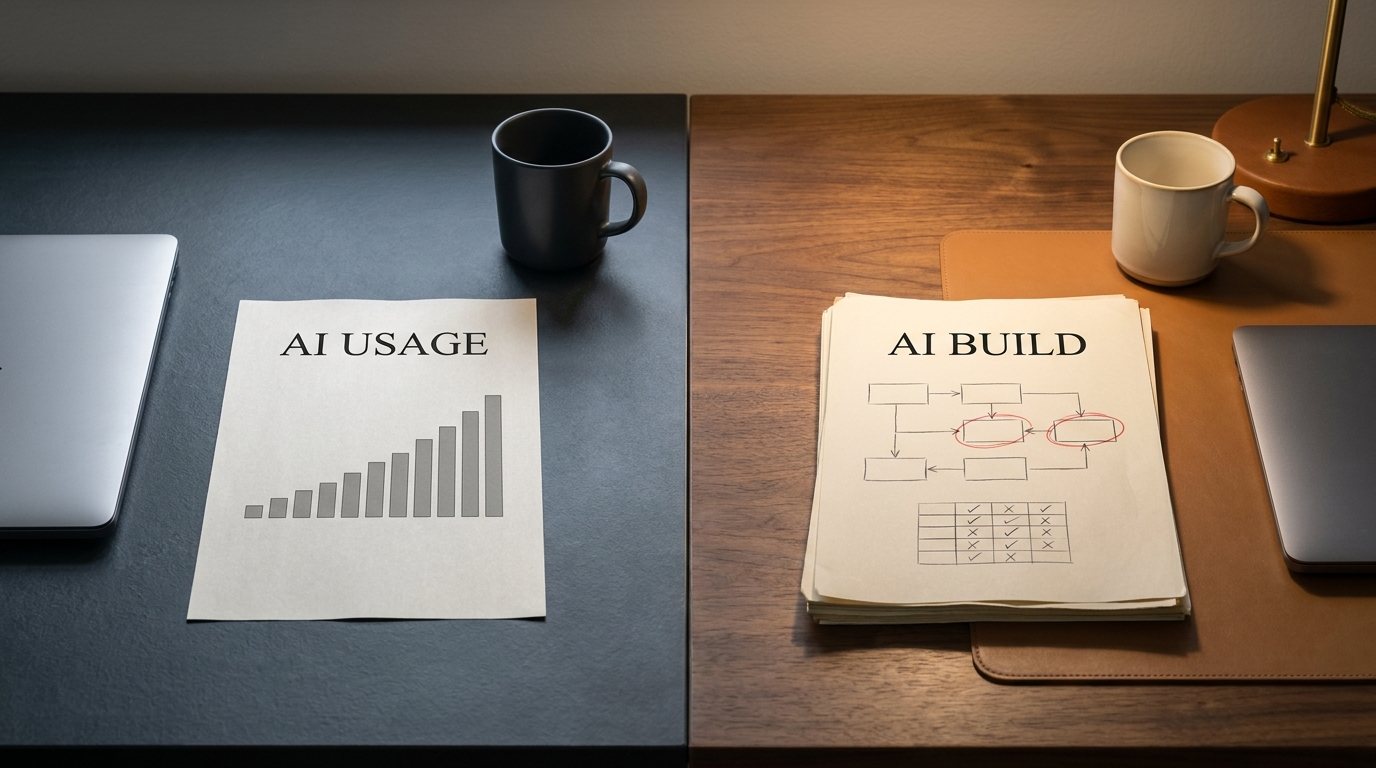

Ask most AI vendors where their product does not belong, and watch the conversation change shape. The deck fills with use cases. The roadmap grows. The word "everywhere" shows up. What almost never shows up is a single workflow they would refuse to touch. And that refusal is the thing a finance or operations leader actually needs, because the person accountable when an automated decision goes wrong is rarely the person who sold the automation.
This is for the CFO, the COO, and the head of risk being pushed to put AI into every corner of the business, who still need a defensible way to decide where not to. The most credible thing an AI partner can do is name the workflows it would leave alone and show the standard it used to get there. Some processes sit below a bar. Automating them adds exposure without adding value, and the leader who signed off answers for it later.
Why "no" is the signal you can trust the answer
A vendor who never declines is selling, not advising. When every workflow is a fit and every answer is yes, the recommendation carries no information. It would have been the same regardless of what you showed them. Judgment shows up as a boundary. A partner who can point at a specific process and say "not this one, and here is why" is telling you their model of the problem is real enough to have edges.
For the accountable executive, that boundary is also cover. Boards and markets are pressing hard for adoption, and "we are being careful" reads as hesitation unless it comes with a reason. A named standard turns caution into a decision. Instead of "we are not ready," you get to say "this workflow fails three of the six tests we apply before automating anything, so we left it alone and moved the budget to one that passed." That is a position, not a retreat. The rest of this piece hands you that standard, and the workflows that most often fall short of it.
The bar: what a workflow has to clear before automation earns its place
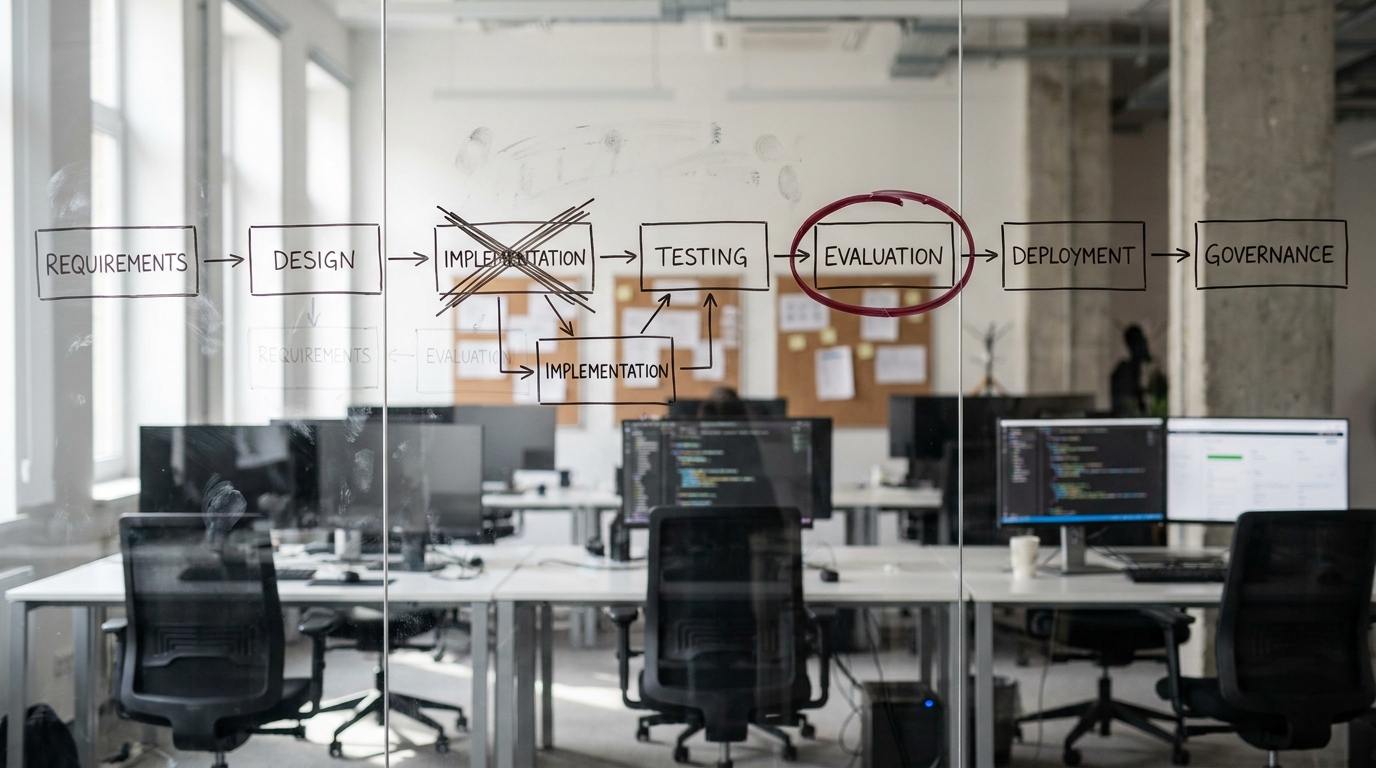
We call it retiring work below the bar. Before a workflow is a candidate for AI, it should clear six dimensions. Each is a plain question a non-technical leader can ask and answer.

- Volume. Does this run often enough that automating it pays back the cost to build and maintain it?
- Rule clarity. Are the rules written down and agreed on, or do experienced people still disagree about how the work should be done?
- Liability. If the output is wrong, who absorbs the harm, and how large is it? Regulatory, financial, safety, or reputational.
- Data quality. Is the data that would train or feed the system accurate, representative, and available, or is it thin, biased, or scattered?
- Process stability. Does the workflow hold still long enough to be worth encoding, or does it change faster than a model can be maintained?
- Measurable payoff. Can you name the specific metric that will move, and by roughly how much, before you start?
Clear all six and you have a strong candidate. Fail a single high-stakes dimension - liability, especially - and it can be disqualified on its own. The point of the bar is not to score workflows for sport. It is to make the "leave alone" decision explicit and repeatable, so it holds up in a room full of people who were promised AI would go everywhere. What follows are the six archetypes that most often sit below the bar, each with the tell you can recognize, who owns the risk, and the call to make.
Bad-fit workflow one: low-volume, low-repetition tasks
If a task runs a handful of times a month, automation almost never pays for itself. The tell is easy to spot once you look for it. The process is important but infrequent: a quarterly reconciliation, an annual vendor review, a one-off analysis that surfaces only when a specific deal appears. Because these tasks are rare, there is little repetition for a system to learn from and little time saved per run to offset the cost of building and maintaining the automation.
The hidden expense is maintenance. An automated low-volume workflow still needs monitoring, updating, and someone who understands it when it breaks. And it will break at the worst moment, because no one has touched it in months. The math rarely closes. Leave these alone and let a capable person handle them directly. Revisit only when volume scales, when the quarterly task becomes weekly or the one-off becomes a pattern. At that point it crosses back over the bar and the conversation is worth reopening.
Bad-fit workflow two: unclear or contested rules
When the logic behind a workflow is not written down, or the people who run it disagree about how it should work, a model does not resolve the ambiguity. It encodes it. The tell is a process that depends on judgment nobody has documented, where two experienced staff would make different calls on the same case and both could defend theirs. Automating that does not produce a correct answer. It produces a confident one, frozen from whichever interpretation happened to shape the training data.
The damage is quiet. The system runs, the output looks clean, and the underlying disagreement is now buried inside a tool few people can inspect. Contested exceptions that used to trigger a conversation now pass silently. The fix is not technical. Before this workflow can clear the bar, the organization has to settle the rules: write them down, resolve the disagreements, and confirm they hold across the real cases. Do that work first. Then reassess whether automation is worth it. A model can enforce a rule you have agreed on. It cannot decide one you have not.
Bad-fit workflow three: high-liability decisions
Some decisions carry consequences large enough that being usually right is not good enough. Credit approvals, hiring, clinical calls, safety-critical steps, legal positions, anything that feeds a financial statement. The answer-first verdict: keep these under human ownership, and be honest about whether "human in the loop" is real oversight or a rubber stamp.
Human-in-the-loop is not a fix when the human cannot meaningfully review the output. If a system surfaces a hundred recommendations a day and a person has thirty seconds each, they are approving, not reviewing , and the accountability still lands on them and on the executive above them. For a CFO or head of risk, the question is not "can AI help draft this," because often it can. The question is "who owns the failure when the automated output is wrong and no one caught it." If the honest answer is a named human who cannot actually inspect the work, the workflow is below the bar. AI can assist the people who make these decisions: drafting, summarizing, surfacing precedent. It should not make the decision, and the line between assist and decide has to be defended, not assumed.
Bad-fit workflow four: poor or unrepresentative data
A model is only as trustworthy as the data behind it, and the failure mode here is specific. Garbage in, dressed up as a confident answer out. When the underlying data is incomplete, biased, outdated, or scattered across systems that disagree with each other, the system does not refuse to answer. It produces something plausible and wrong, delivered in the same fluent tone as a correct result. That is more dangerous than an obvious error, because a plausible mistake gets acted on.
The tell is a workflow where you cannot cleanly say where the data comes from, how current it is, or whether it represents the full population you care about. A lending model with thin history on a segment. A forecasting tool fed inconsistent records from three acquisitions that were never reconciled. The output inherits every gap. The cost of "plausible but wrong" is paid downstream, by whoever trusted the confident number. Leave these alone until the data is fixed. The readiness work of cleaning, consolidating, and checking representativeness is not a step you do after deploying. It is the thing that decides whether deploying is defensible at all.
Bad-fit workflow five: unstable, fast-changing processes
Some workflows change faster than a model can be maintained. Regulations shift quarterly, the product reorganizes, the market moves, and the process that was accurate in January is wrong by June. Encoding a moving target means the automation is out of date almost as soon as it ships, and keeping it current becomes a standing tax on the team.
The tell is a process that has been redesigned more than once in the past year, or one tied to rules you expect to change again soon. Here the maintenance debt exceeds the benefit . Every change to the underlying workflow forces a change to the system that encodes it, plus testing, plus the risk that an update quietly breaks something no one notices until it matters. For organizations without the capacity to maintain models against changing processes, this is where automation quietly rots. Leave the workflow with people who can adapt in real time, and revisit when the process stabilizes. If it never stabilizes, that is your answer.
Bad-fit workflow six: no measurable payoff
If you cannot name the metric that will move, you cannot defend the spend. This is the dimension leaders skip most often, because automating something feels like progress even when no one can say what it improved. The tell is a project justified by language rather than numbers - "efficiency," "innovation," "staying current" - with no specific figure anyone committed to before starting.
Over-automation carries a negative return that rarely shows up on a dashboard. The build cost, the maintenance, the change management, and the attention it pulls from workflows that would actually pay back all land as real expense, offset by a benefit no one can measure. For a CFO, an automation with no measurable payoff is not neutral. It is a loss dressed as modernization. Before a workflow clears this dimension, name the metric, set a rough target, and agree how you will check it. If the honest answer is that the payoff cannot be measured, the project is below the bar, and the budget belongs somewhere it can be.
What we do instead with below-the-bar work
Leaving a workflow alone is a decision, not a shrug, and it takes three honest forms. The first is to leave it with people, permanently, because it is genuinely a poor fit and always will be. Low volume, or a judgment call that should stay human. The second is to redesign the process before automating, most often for the contested-rules and poor-data cases, where fixing the input is the real project and the automation is a later, smaller step. The third is to wait, for the unstable and low-volume cases that may cross the bar once volume grows or the process settles.
This is where the six dimensions stop being a stop test and become a readiness signal. The same questions that disqualify a workflow today tell you exactly what would have to change for it to qualify tomorrow. A process below the bar on data quality becomes a data-cleanup roadmap. One below the bar on rule clarity becomes a documentation project. Deciding what not to automate is how you find the shortlist of what to scope next, which is a far more productive conversation than "put AI everywhere." If you want to turn that shortlist into a plan, AI Transformation Discovery is where we map which above-the-bar workflows are worth pursuing first.
How to run the bar on your own workflows this week
You do not need a tool or a consultant to start. List the workflows currently being proposed for AI, or the ones already running that you are unsure about. Keep it concrete, a real process someone owns, not a category. For each one, walk the six dimensions in order and mark where it stands.
- Volume: often enough to pay back, or rare?
- Rule clarity: written and agreed, or contested?
- Liability: low, or large enough that "usually right" is not safe?
- Data quality: clean and representative, or thin and scattered?
- Process stability: stable enough to encode, or a moving target?
- Measurable payoff: a named metric, or a vibe?
Any workflow that fails a high-stakes dimension - liability especially - gets parked, and the reason gets written down so the decision is defensible later. Workflows that clear all six move to the top of the automation list. The ones in between become improvement projects: fix the data, settle the rules, then reassess. Run this once and you will have a defensible map of where AI belongs in your business and where it does not, which is precisely the language a board wants and precisely what the pressure to adopt usually lacks.
If you want a second read on that map, get an AI Readiness Snapshot , a free 30-minute call that walks your candidate workflows against this same bar and shows where AI will have the most immediate impact, and where it will not. The value of a partner is not just knowing where AI fits. It is being willing to tell you where it does not.
Key takeaways
- Six dimensions decide the bar: volume, rule clarity, liability, data quality, process stability, and measurable payoff. A workflow should clear all six before automation earns its place, and a single high-stakes failure - liability above all - can disqualify it alone.
- Saying no is a trust signal. A partner who names the workflows they would leave alone is showing you their judgment has edges. A vendor who never declines is selling, not advising.
- The six most common bad-fit workflows are low-volume tasks, contested rules, high-liability decisions, poor data, unstable processes, and work with no measurable payoff.
- "Leave alone" has three forms: keep it human permanently, redesign the process first, or wait until it crosses the bar. The same test that disqualifies a workflow shows you what would have to change for it to qualify.
- Deliberate non-adoption is a discipline, not a lack of ambition. The bar protects both the spend and the person accountable for it.