A backdoored coding extension, a frontier model held back for security teams, and Anthropic's first full set of public numbers made this a week about exposure. Some of it sits on your engineers' laptops, and some of it sits on the balance sheets of the vendors you buy AI from.
A backdoored Claude Code extension reached Cursor users through auto-update
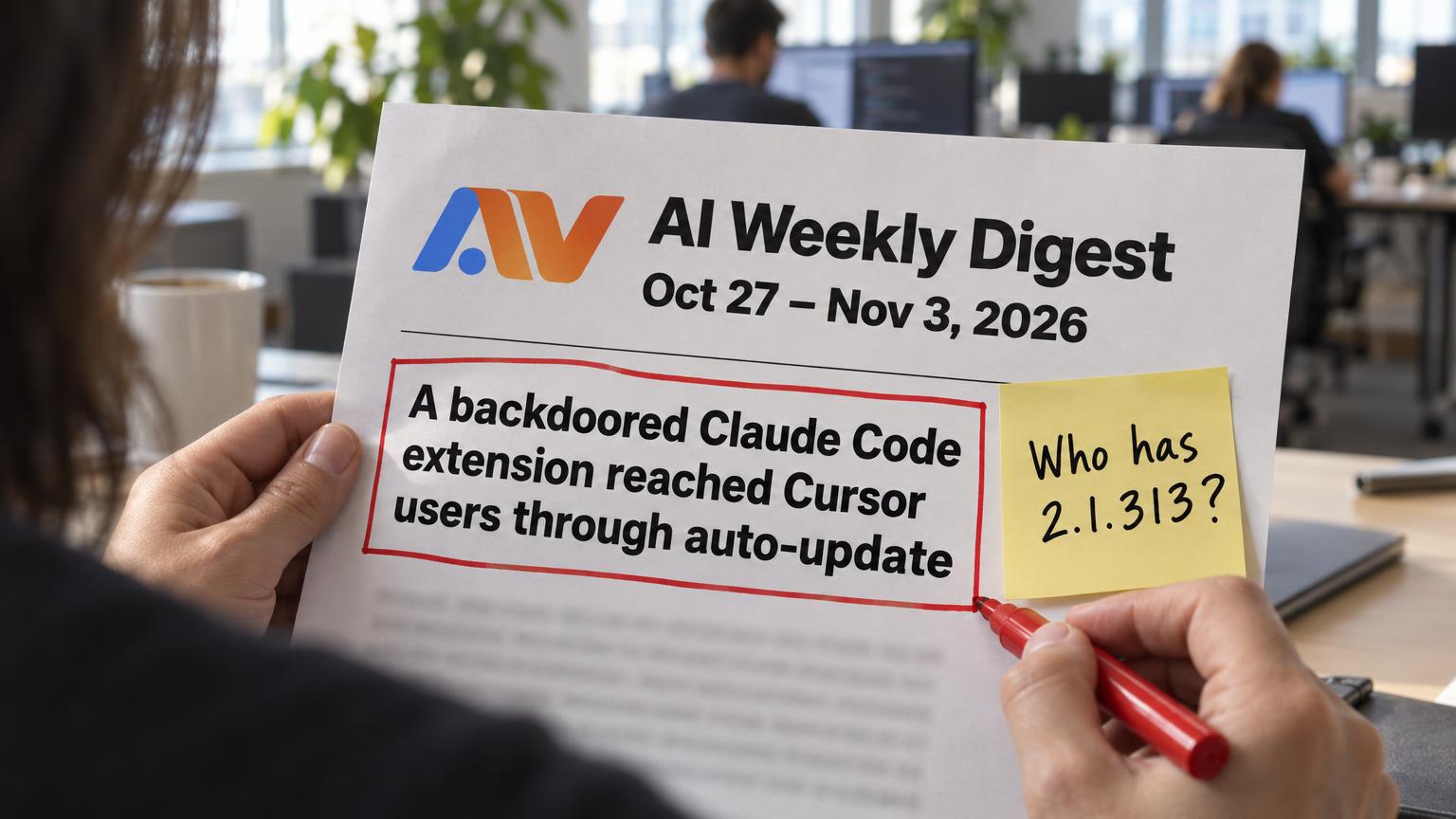
On October 30, security firm Phorion reported a backdoor in the Claude Code for VS Code extension on Cursor's marketplace . Versions 2.1.312 and 2.1.313 appended an attacker's SSH key to authorized_keys, tried to open a reverse SSH tunnel, installed persistence that survives a reboot, and sent home a report with the host's details and the names (not the values) of environment variables matching KEY, TOKEN, SECRET or AWS. Cursor pulled both versions and, as Kevin Beaumont's write-up relays, says around 5,000 developer systems were affected after the extension auto-updated. Anthropic says the breach was in Cursor's marketplace, not in its own build.
Most companies could not say this morning which editor extensions sit on their developers' laptops, or which marketplace they came from. Build that inventory first. Uninstalling won't finish the job: Phorion notes that removing the extension leaves the planted key, a hidden ~/.config/.smt script and a LaunchAgent named com.apple.sysmond behind. Hunt for those files and for outbound SSH to the attacker's server, then rotate any token the affected user account could reach. After that, switch off extension auto-update on managed machines (VS Code exposes it as extensions.autoUpdate) and put the editor marketplace through the same allowlist review your browser extensions already get. With four engineers, that is an afternoon and a short script.
Google gives Gemini 4 Carbon to cyber defenders first
Google DeepMind announced Gemini 4 Carbon on October 28 , two weeks after Gemini 4 Argon, and called it its strongest model. Google reports 88.2% on SEC-bench Pro for finding vulnerabilities and 71.0% on CWE-bench for patching them. Access starts with a subset of cyber defenders and widens to trusted partners through Google's Fairwind Program before developers and businesses get it. The introductory price matches Argon at $2 per million input tokens and $10 per million output tokens, rising to $4 and $20 when the introductory period ends.
Two numbers in that post belong in your cost model before the model ever reaches your tenant. A business case built on $2 and $10 needs a second column at $4 and $20 from day one, since Google has already published the later price. Google also says Carbon has run for days on long engineering tasks. An agent that runs for days bills for days, so the figure to track in testing is cost per finished task . The gated launch gives your security lead something to do now: ask your Google Cloud account team whether Fairwind access is open to customers like you, and keep a set of your own past, already-fixed vulnerabilities ready as a private test.
Mistral releases the weights of its trillion-parameter Large 4
Mistral published the open weights of Mistral Large 4 on October 29, a 1-trillion-parameter multimodal model trained from scratch in Europe, after a public preview earlier in the month. Mistral calls it the best open-weight model for coding and reports 41% on Terminal-Bench 4.0 and 51% on the Artificial Analysis Cyber Index, with low, medium and high reasoning modes to trade cost for depth. The license is a modified MIT: free to use, fine-tune and sell, except that companies offering it as a hosted model service need a separate commercial license. It is also available through Mistral's API, OpenRouter and Microsoft Foundry.

Data-residency rules that kept frontier-class models away from your most sensitive workloads now leave room for an open model that, by Mistral's numbers, leads its category in coding. Keep the test narrow. Pick one workload legal won't let you send to a US-hosted API, such as code in a regulated repository or contract review, and price it two ways: on your own GPUs, and as a private deployment in Microsoft Foundry. Serving a trillion-parameter model takes serious GPU capacity, so for most mid-market firms the managed private deployment will win the spreadsheet. The open weights still earn their place in the decision, because you can audit them and keep running the model if the vendor relationship ends.
Anthropic's revised S-1 shows $17 billion in quarterly revenue and $895 billion in commitments
Anthropic filed an amended S-1 on November 2 showing about $17 billion of third-quarter revenue, a $23.3 billion net loss for the quarter and $104 billion of losses over nine months, most of it from changes in the fair value of convertible notes and derivatives, CNBC reports. Growth slowed sharply from the first half. The filing lists about $895 billion of purchase commitments and leases, nearly all of it compute and infrastructure. Days earlier, the Financial Times reported that Blackstone now expects a high "junk" credit rating after the IPO rather than investment grade, as TechCrunch summarized .
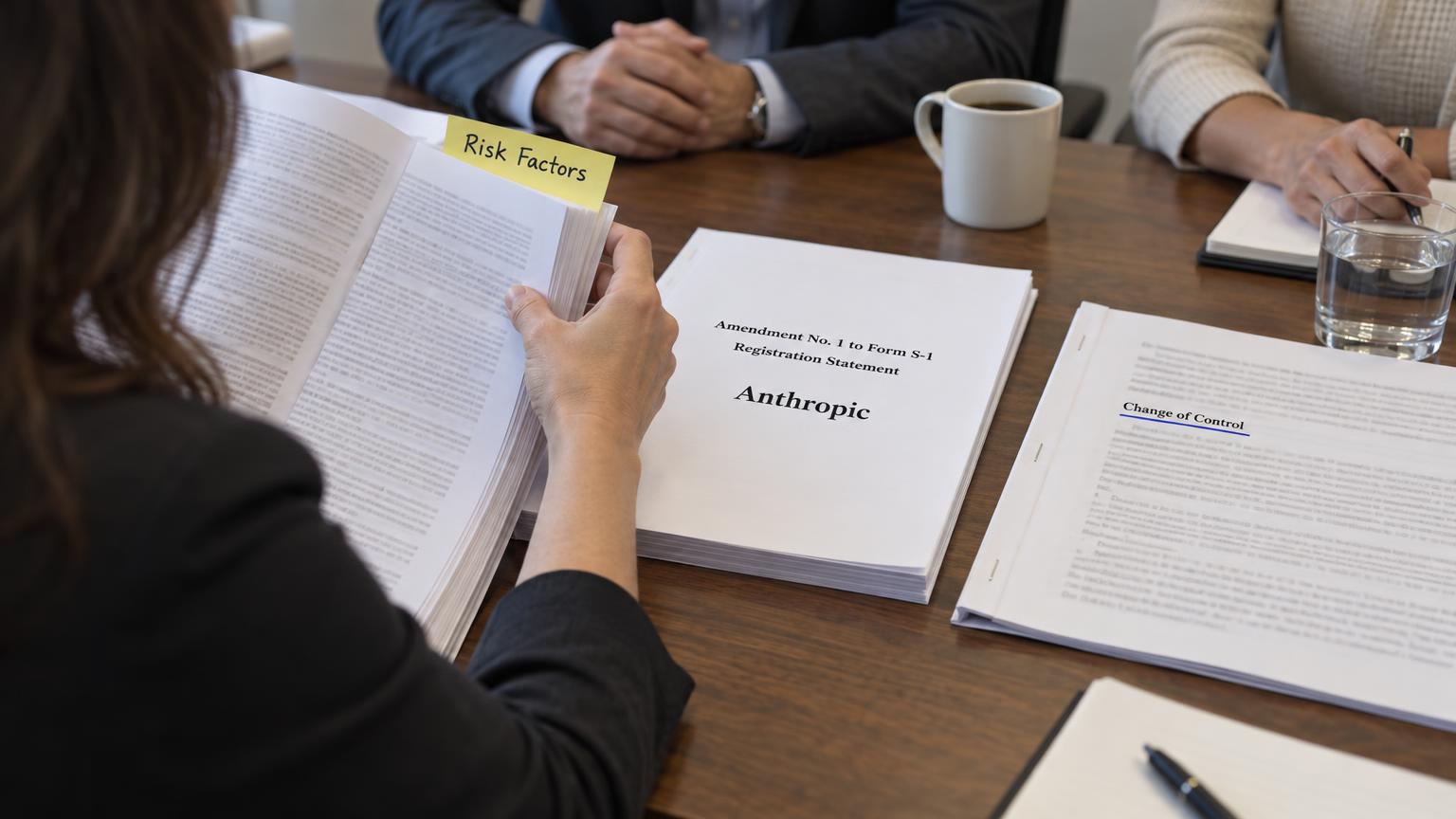
No sales cycle will ever hand you this much information about a model vendor. The risk factors alone run past 90 pages (CNBC's count), and the filing says Anthropic gets much of its capacity from Amazon, Google and SpaceX, which tells you whose outages and contract disputes can reach your Claude workloads. Before the next renewal, copy the capacity dependencies, the commitments set against revenue and the credit outlook into your vendor-risk file . Then reread your own contract for what happens to pricing and data handling on a change of control, so the answer is on file before procurement asks for it.
OpenAI merges ChatGPT's tabs and pools ChatGPT and Codex usage
OpenAI told users it will merge the Chat and Work tabs in the ChatGPT app , starting with select users, while Codex stays a separate section of the desktop app. From December, Plus, Pro and Business plans will draw ChatGPT and Codex usage from one token-based allowance, according to OpenAI's help center . Instant chat won't count against it, combined usage appears under Settings, and users who hit the limit can wait for a reset, upgrade, or buy credits.
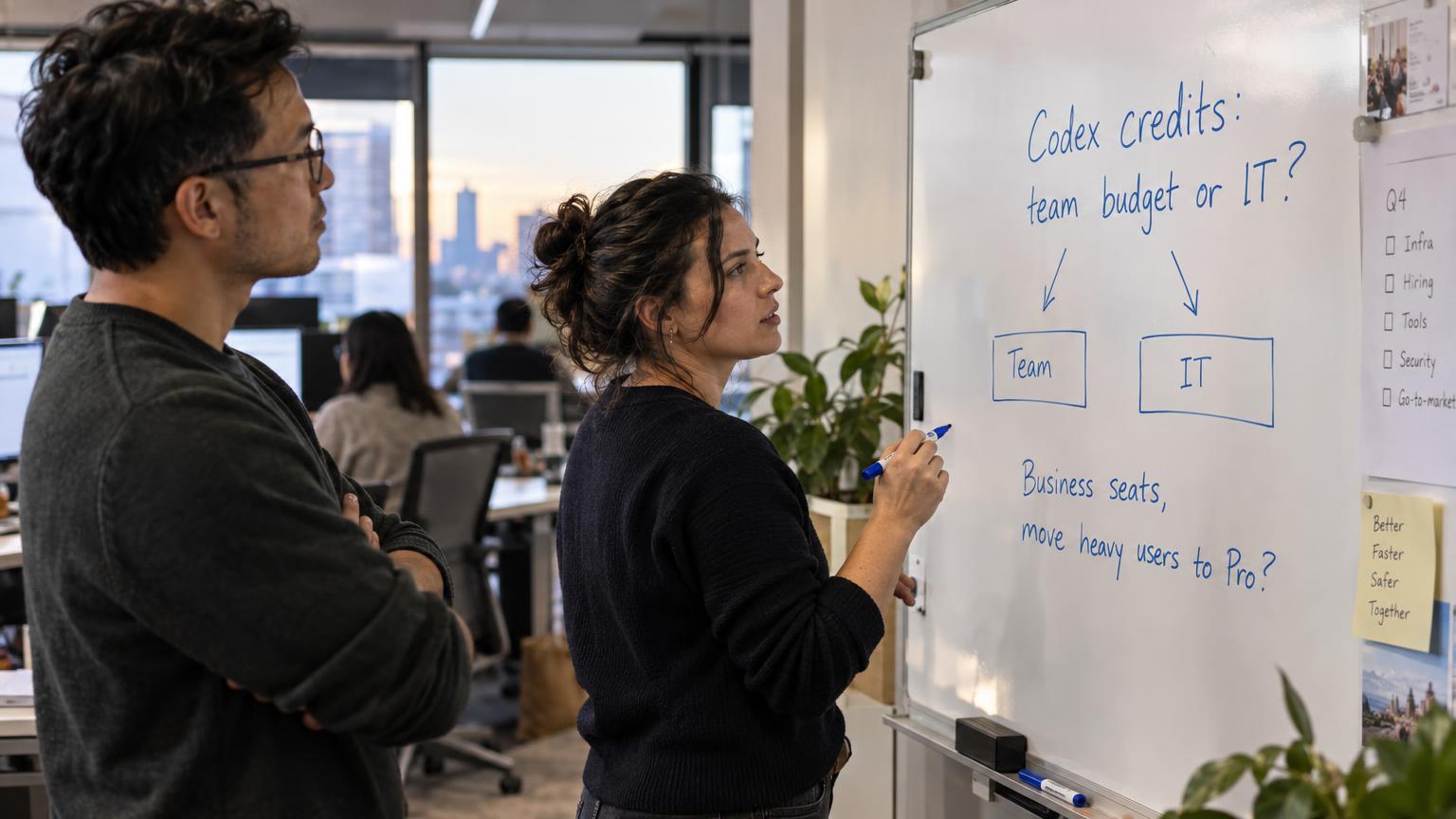
Seats that looked generous in a chat-only rollout behave differently once each engineer's Codex sessions and everyday ChatGPT work draw on one allowance. Before December, pull a month of usage for your heaviest Codex users and check which of them sit on Business seats. They will hit resets first, and they will be the ones asking for credits. Decide now whether credits come out of the team's budget or IT's, and whether heavy coders move to Pro. OpenAI says consumption depends on the model chosen and the task, and that variance is what a flat per-seat budget fails to absorb.
Salesforce agrees to buy Cresta for its contact-center voice agents
Salesforce signed a definitive agreement to acquire Cresta on November 2 and plans to fold its voice agents, real-time coaching for human reps, and conversation analytics into Service Cloud. Cresta counts Marriott, Comcast and Alaska Airlines among its customers. Salesforce didn't disclose a price. Silicon Republic, citing a person familiar with the plan, put it at about $2.7 billion . The deal is expected to close in the first quarter of Salesforce's fiscal 2028.
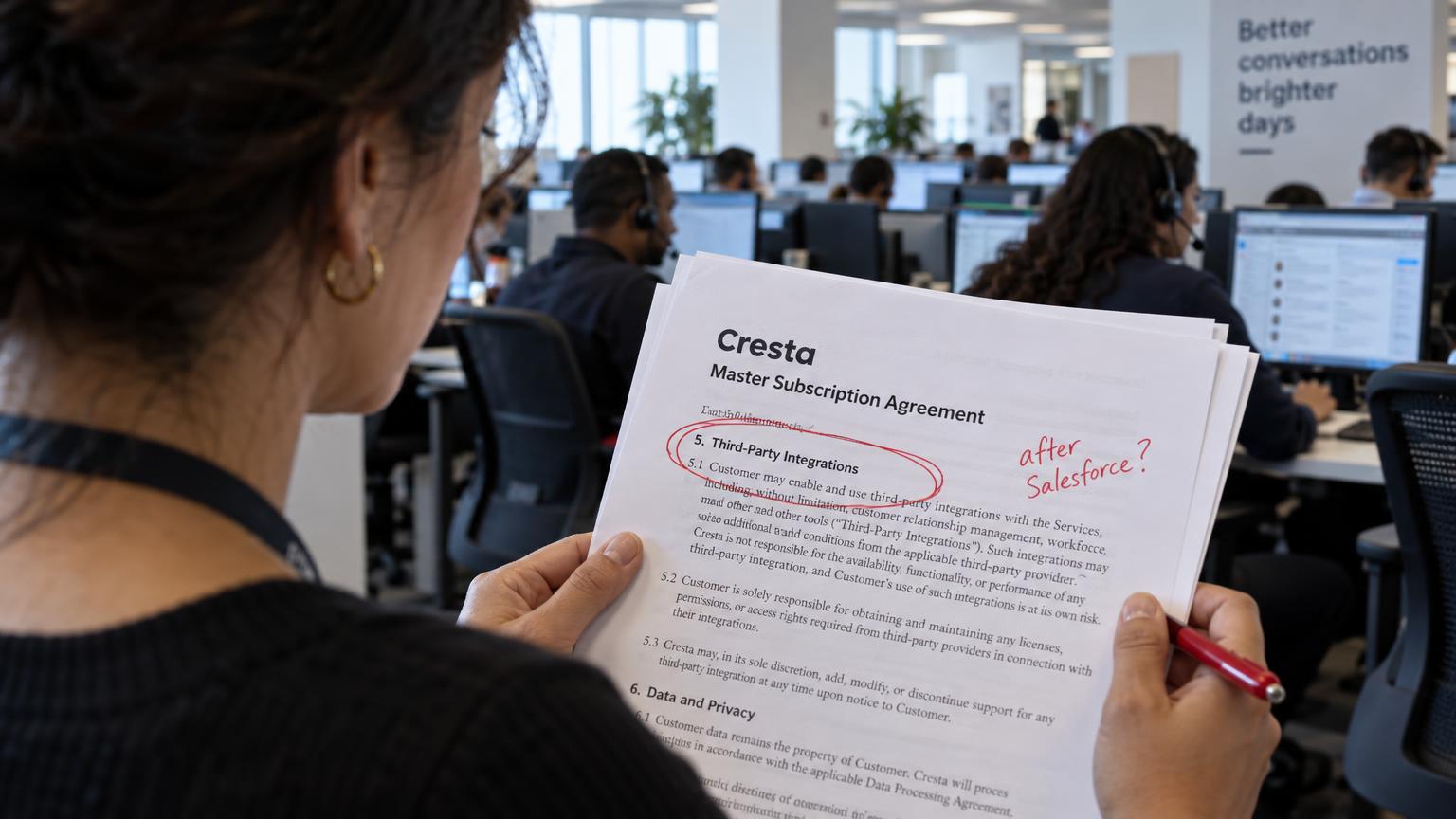
Contact-center voice agents are often a mid-market service team's first AI purchase, and this deal reshuffles the shortlist. Salesforce says Cresta will keep supporting the contact-center and telephony platforms its customers use today, a statement about the present with no end date attached. Mid-evaluation, ask Cresta for a written commitment on non-Salesforce integrations for the length of your contract, plus a cap on renewal pricing. Already on Service Cloud? Ask Salesforce how Cresta will be packaged next to Agentforce before you sign a separate voice-AI contract that could overlap with it within a year.
Oracle plans to put ChatGPT and Codex inside Fusion and NetSuite
At Oracle AI World on October 27, Oracle and OpenAI expanded their partnership with four products . Oracle AI Workspace gives staff ChatGPT plugins for Fusion applications, NetSuite and Oracle's database, and has no date yet. App Composer lets employees build apps with Codex that Oracle runs on its cloud, open now to a limited group of customers, and AI Security Mesh uses OpenAI's cyber models to probe a company's systems. A small-business bundle adds ChatGPT Business and NetSuite tools to $12,000 a year in Oracle cloud credits for up to three years, for independent, privately held US companies.
A NetSuite shop now has a cheaper route to ChatGPT than a standalone pilot. The credits, and the chance to put AI inside the ERP the finance team already uses, change the build-or-buy math for the "ask our books a question" workflow that tends to top a CEO's wish list. The questions for your Oracle account team are specific. Which NetSuite roles and records can the Workspace plugins read, do their actions land in NetSuite's audit trail, and what does the bundle cost once the credits run out? Until Workspace has a ship date, budget nothing against it.
Also this week
- OpenAI cuts the target for its new funding round - The FT reported that OpenAI lowered the target to $20 billion from a previously reported $30 billion, and the Wall Street Journal said it had secured $11 billion so far amid a tepid response from some large investors. TechCrunch
- Marvell agrees to buy Lumentum in an all-stock deal - Lumentum holders get 4.5 Marvell shares each, which the companies say implies a $115 billion enterprise value. The Wall Street Journal's headline put the deal at $80 billion. Closing is expected in the first half of 2028. Marvell and Lumentum
- OpenAI plans to buy Google's AI chips - The Information reported that OpenAI, one of Nvidia's largest customers, plans to buy Google's TPUs. Terms weren't disclosed, and OpenAI declined to comment. The Next Web
- The New York Times sues Brave - The Times, and separately three other papers, sued Brave in Manhattan federal court, alleging it scraped their content into an index sold to AI companies including Anthropic, Perplexity, Mistral, xAI and Cohere, and let users bypass paywalls. TechCrunch
- Musk throttles Grok Bot - Users found their weekly limits maxed out over Halloween weekend, and Musk said the cost of serving Grok Bot was "unsustainably high relative to revenue." TechCrunch
- Gemini now edits files inside the chat - The Gemini app can create, preview and edit documents, PDFs, presentations, spreadsheets and code in the conversation. PDFs work on web and mobile, other formats on the web only. Google
- GPT-6 Astra edits another model's weights - MIT CSAIL researchers report that GPT-6 Astra, with no training loop, edited 0.016% of Qwen3.5-0.8B's weights and lifted its MATH-500 score from 7.9% to 48.1%. MIT CSAIL researchers