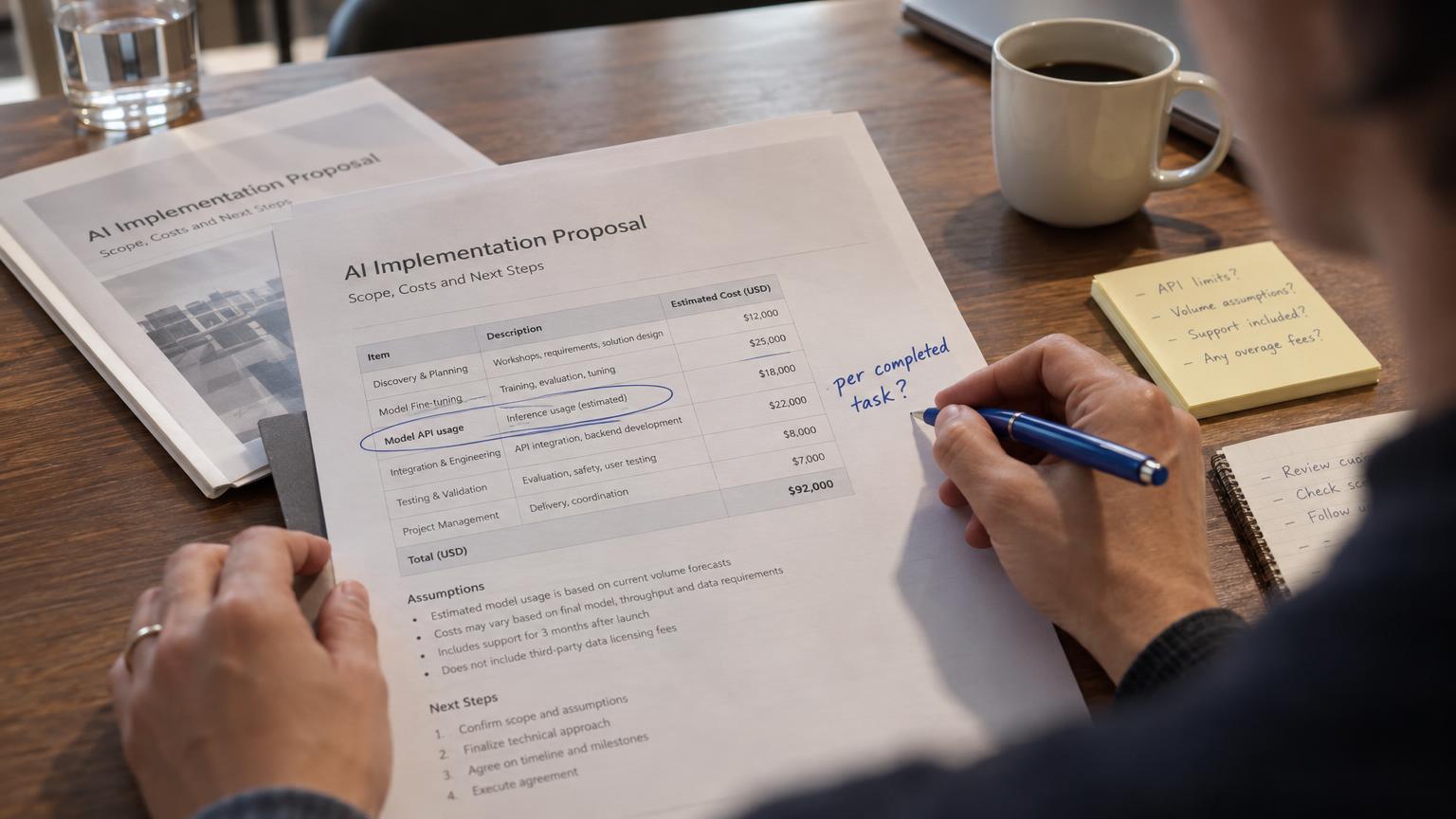
Anthropic shipped 27 versions of Claude Code between 23 September and 22 October 2026, from v2.1.281 to v2.1.309. Those releases landed on 22 of the 30 days, and on five of them two versions went out the same day. A two-week sprint now spans about a dozen releases of the tool your engineers use to write the code.
It looks like a reading problem. It is a scheduling problem.
Nobody on your team reads all of that, and nobody should. Skipping it has a cost, though, and it's quieter than a failed build. Engineers keep splitting tasks, adding flags and maintaining wrappers for limits that were lifted weeks ago. Headless jobs change behavior on a Tuesday with no commit on your side. More reading won't fix that. A small, scheduled process will: an owner, a triage scheme and a version policy for the tool itself.
At company level, we've argued that leaders should make following AI releases a company rule before your assumptions expire . An engineering team needs the operating version of that habit, and the Claude Code changelog is a good place to build it, because it moves fastest.
What a month of Claude Code updates actually looks like
The count comes from the GitHub releases for anthropics/claude-code, cross-checked against CHANGELOG.md in the same repository. In that 30-day window there were eight days with no release. So "daily" overstates it. "Most weekdays, sometimes twice" is closer, and it works out to roughly six a week.
Each release is also long, and that is where teams give up. v2.1.309 alone has 79 entries in CHANGELOG.md, from sandbox and permission fixes to editor details. Most lines in any release will never matter to your team. A few will matter a lot, and they look like this:
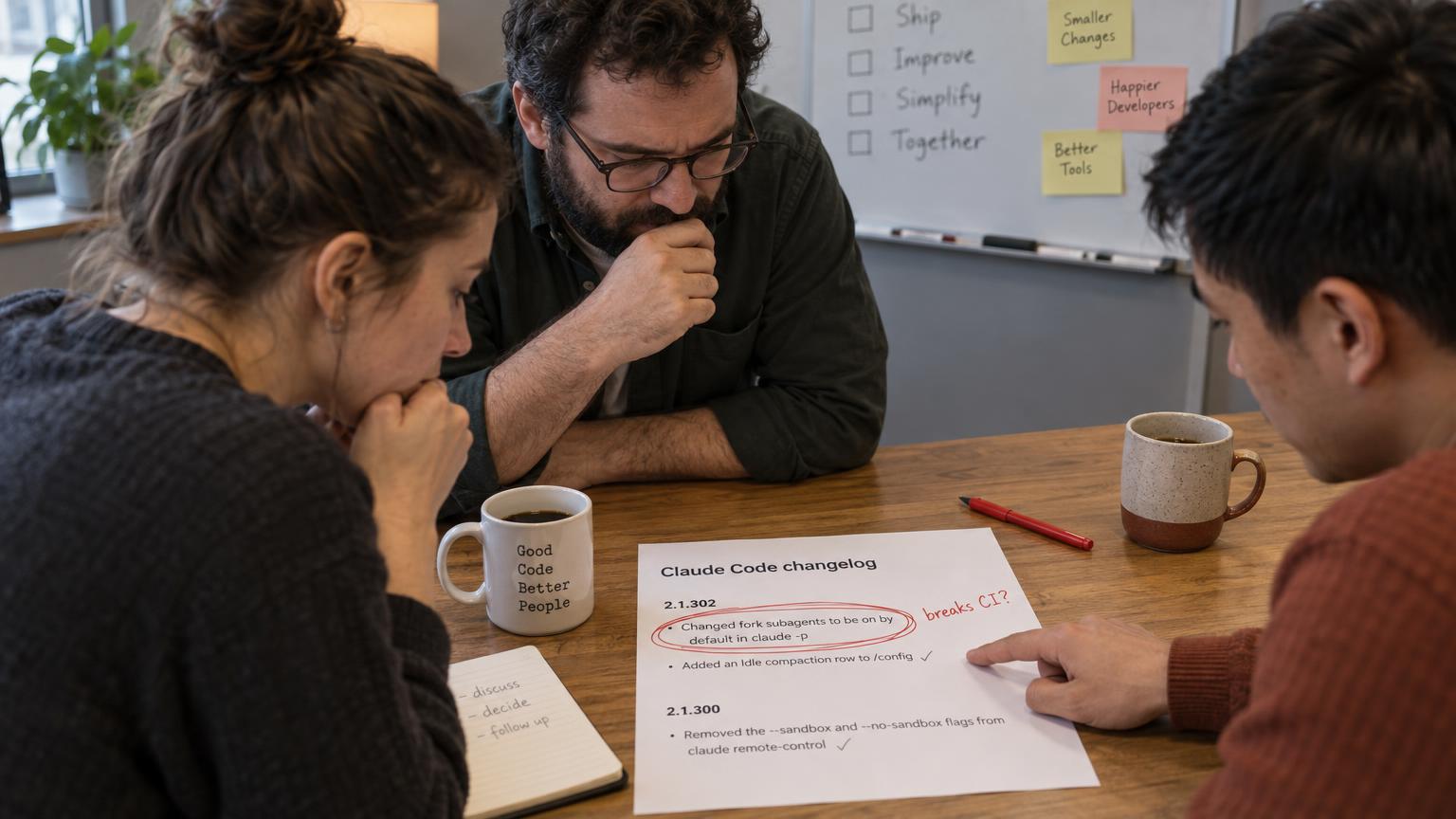
- A changed default. In v2.1.302, fork subagents became on by default in
claude -p, the Agent SDK, the desktop app and VS Code, matching the terminal.CLAUDE_CODE_FORK_SUBAGENT=0turns them off. If your CI or internal tooling runs Claude Code headless (non-interactively, throughclaude -p), that one line changes how your automation behaves. - A removal. In v2.1.300, the
--sandboxand--no-sandboxflags were removed fromclaude remote-control. They had no effect, but passing either now exits with an error. A script that passed one "just in case" stops working. - A new capability. v2.1.304 added
/auto-mode-setup, a guided setup that reads your project and recent sessions to teach auto mode about your environment.
Claude Code is only one feed. Anthropic publishes platform release notes and a model deprecations page. OpenAI keeps an API changelog and a combined ChatGPT and Codex changelog . A team using two vendors' tools is looking at several streams, each moving on its own schedule. Reading them is not the job. Sorting them is.
Not every Claude Code update matters equally
The way out of the volume problem is to stop treating every line as reading material. Sort each relevant item into one of four classes instead. Each class maps to an action, so the sort is also the to-do list.
| Class | What it looks like | Example | Team action |
|---|---|---|---|
| Changes a default or can break a workflow | "Changed", "Removed", "now exits with an error", "no longer" | v2.1.302 fork subagents on in | Test before rollout, tell the team |
| Removes a workaround you built | The tool now does what you scripted around | A limit lifted, a flag added, a bug fixed that you had a wrapper for | Delete the workaround, update docs |
| New capability worth a trial | "Added" plus a feature that touches your workflow | v2.1.304 | One person trials it and demos it |
| Ignore | UI polish, platforms you don't use | VS Code microphone notices, vim motions | Nothing |
Most lines land in the last row. The first row holds the risk, and luckily it's the easiest to find. Search each release for "Changed", "Removed", "default" and "no longer" before reading anything else.
The second row is the one teams miss, and it costs the most. Nobody announces that your workaround is obsolete. You only find out if someone who remembers why the workaround exists reads the line that retires it.
A weekly rhythm with one rotating owner
Sorting needs a person and a time slot, or it doesn't happen. Keeping up works when it is a small, fixed job that moves around the team. Here is the procedure we recommend:
- Rotate the owner. One engineer per week (or per sprint) owns the vendor feeds. Rotation spreads the context, and it stops one "AI person" from becoming the bottleneck.
- Fix the slot. Book 45 to 60 minutes on the same day each week. Friday morning is a good default, since it catches the week's releases before anyone upgrades over the weekend.
- Name the feeds. The Claude Code changelog, Anthropic's release notes and model deprecations, OpenAI's API and Codex changelogs, plus whatever else your team runs, such as Cursor or Copilot.
- Post a short digest. Ten items at most, in the team channel. Each item gets its triage class, a one-line "what this means for us", and a link to the source line. A full item can be this short: "Changes a default: v2.1.302 turns fork subagents on in
claude -p. Our CI jobs use-p, so test before the next bump." - Review it in a meeting you already have. Spend 15 minutes in the weekly sync agreeing what to do about each item in the first three classes and naming who does it. Don't create a new meeting.
The digest also becomes a record. Three months later, when someone asks why the team turned a setting off, the answer is in the channel with a version number next to it.
None of this helps if half the team is missing the basics. A digest about changed defaults lands on nobody when people never learned how the tool is configured. That is the same gap we describe in your AI-driven development won't work if even one person isn't trained .
Version control for the tools themselves
A digest tells you what changed. It doesn't stop the change from reaching your laptops and pipelines before you're ready. Treat Claude Code as a dependency, because for your workflow it is one. The official setup documentation gives you the controls:
- Native installs auto-update in the background. That is the default, and for an individual it is fine.
autoUpdatesChannelpicks"latest"(the default, new versions as they ship) or"stable", which Anthropic describes as a version typically about one week old that skips releases with major regressions. You can enforce the channel across the organization with managed settings.minimumVersionsets a floor that auto-updates andclaude updatewill not go below.DISABLE_AUTOUPDATERset to"1"in theenvblock ofsettings.jsonturns auto-updates off, which is what you want in CI and containers where an exact pin should rule.
{
  "autoUpdatesChannel": "stable",
  "minimumVersion": "2.1.282"
}
So should your team auto-update Claude Code or pin it? For laptops, the stable channel plus a minimumVersion floor is a sensible default. For anything that runs unattended, pin an exact version and bump it on purpose. The one reason to jump ahead is the one the docs flag: a newly launched model can require a Claude Code version newer than the stable channel serves.
Before a bump reaches everyone, one engineer runs the new version against the team's own commands, skills, hooks and MCP configuration on a branch. Keep that setup in the repo (CLAUDE.md, the .claude/ directory, a shared settings.json) so there is one known configuration to test against.
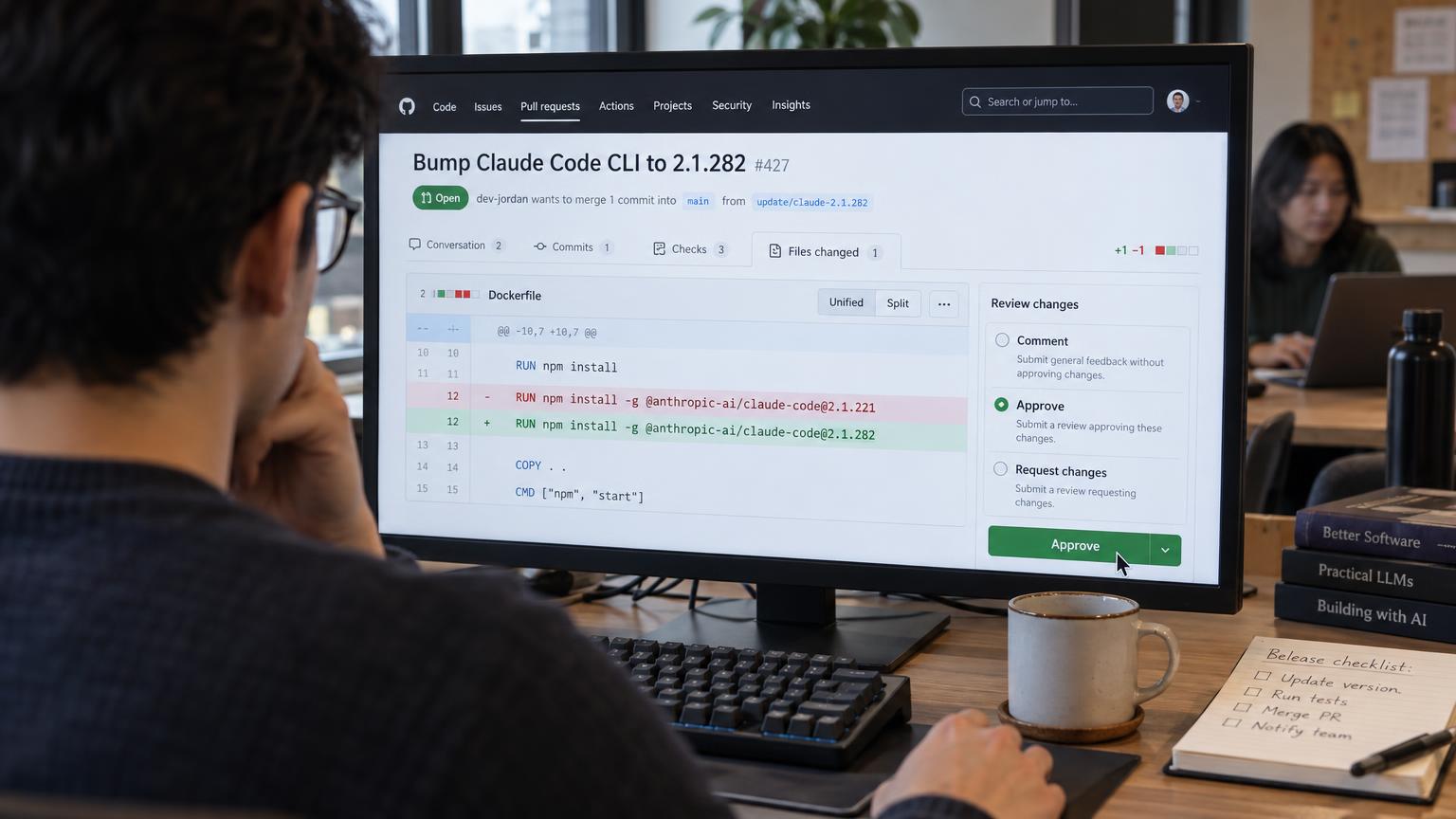
We run our own content pipelines at Advantage Works this way. Two bots run Claude Code headless with claude -p inside Docker containers, and both Dockerfiles pin an exact CLI version rather than "latest". Upgrades go in as reviewed changes, usually alongside a model move. In August a single change moved the pipeline to Claude Opus 5 and the CLI to 2.1.221. In October the move to Opus 5.5 took the CLI to 2.1.282, a version that had been out for about a week. The pin exists because our pipelines depend on exactly the behavior a changelog line can change: a PreToolUse hook that relays approval questions to chat, permission modes, streaming output and subagent behavior. That's why a line like the v2.1.302 change to fork subagents in claude -p is the first thing we look for in a release.
Turning updates into team practice
A digest that nobody acts on is just more reading, which is the problem you started with. Three habits turn it into practice.
Retire workarounds on purpose. Keep a short list in the repo of every workaround the team built around the tool, with one line on why each exists. Check the class two items against it every week. When a line in the changelog retires one, delete the code and the paragraph that explains it.
Change the shared instructions, not just the individual habits. When a default changes, update CLAUDE.md, the team's prompts and the commands in .claude/, so the change reaches every engineer and every agent session at once. Our own CLAUDE.md keeps a "known gotchas" section for this. When a production run died because a long stage had been put in the background and the headless session exited when its turn ended, the rule "never background a long stage" went into that file, and the stage was redesigned to run in short foreground slices. The next run and the next engineer inherit the lesson without having to find it.
Demo instead of linking. Five minutes in the weekly sync showing a class three capability on real work does more for adoption than a link in the channel. If nobody can show it working on the team's own code, it stays in the trial column.
The tools change quickly. The reasoning behind your setup can stay put. We wrote about that split in the AI engineering stack we run, and the logic that outlives it .
What not to do
- Chase every release. Reading every line, or upgrading shared automation the day a version lands, turns a one-hour job into a background tax and imports regressions the stable channel exists to skip.
- Let each engineer track alone. Five people skimming the same changelog means duplicated reading, five different installed versions, and fixes that never reach the shared config.
- Upgrade mid-incident or mid-release. When something is already broken, a new tool version is one more variable you don't need. Hold the bump until the incident is closed.
- Pin and forget. A pin with no review date slowly turns back into the original problem: a team working around limits the vendor removed months ago.
Keeping up is a schedule, not a reading habit
The changelog will keep moving faster than your sprints, and that's fine. Keeping up was never about reading more. What makes it manageable is four triage classes, one rotating owner, one weekly slot and a pinned, tested configuration in the repo. Going by the slot and the review above, that is roughly an hour of one person's week plus 15 minutes of the team's, and in return the team stops paying for limits that no longer exist.
Want your team's AI tooling to stay current without the noise? Start with a 30-minute review of how your team picks up, or misses, vendor updates today. Book a free 30-min readiness call .