
You're using AI to produce more, faster. The drafts come back in seconds , the deck fills itself in, the brainstorm list runs to forty bullets before you've finished your coffee. But here's the question almost nobody asks: is any of it actually original? It's easy now to ship work that looks fine, reads clean, and sounds exactly like everyone else's. That's the real risk, and it has nothing to do with whether AI is "good" or "bad."
AI and creativity is the practice of using AI to widen the range of ideas you can reach, not to mass-produce average output. Used for routine tasks, AI saves time. Used deliberately for non-routine work, it can expand your originality, but only if you refuse to settle on its first, most predictable answer.
Most coverage of AI for creative work sells the same thing: speed. Save five hours a week. Generate a month of content in an afternoon. That's a real benefit for routine production. It's also the wrong success metric for work that's supposed to be original, and chasing it is how teams end up faster at producing the same thing as everyone else.
This article takes the opposite position. The highest-value use of AI is non-routine, original creative work, where AI acts as a partner that expands the space of ideas you can explore rather than a machine that collapses everyone toward the same midpoint. Below is what separates the two, what the research shows about the danger, and a practical model for working so AI stretches your range instead of flattening it.
Routine vs non-routine: the line that changes everything
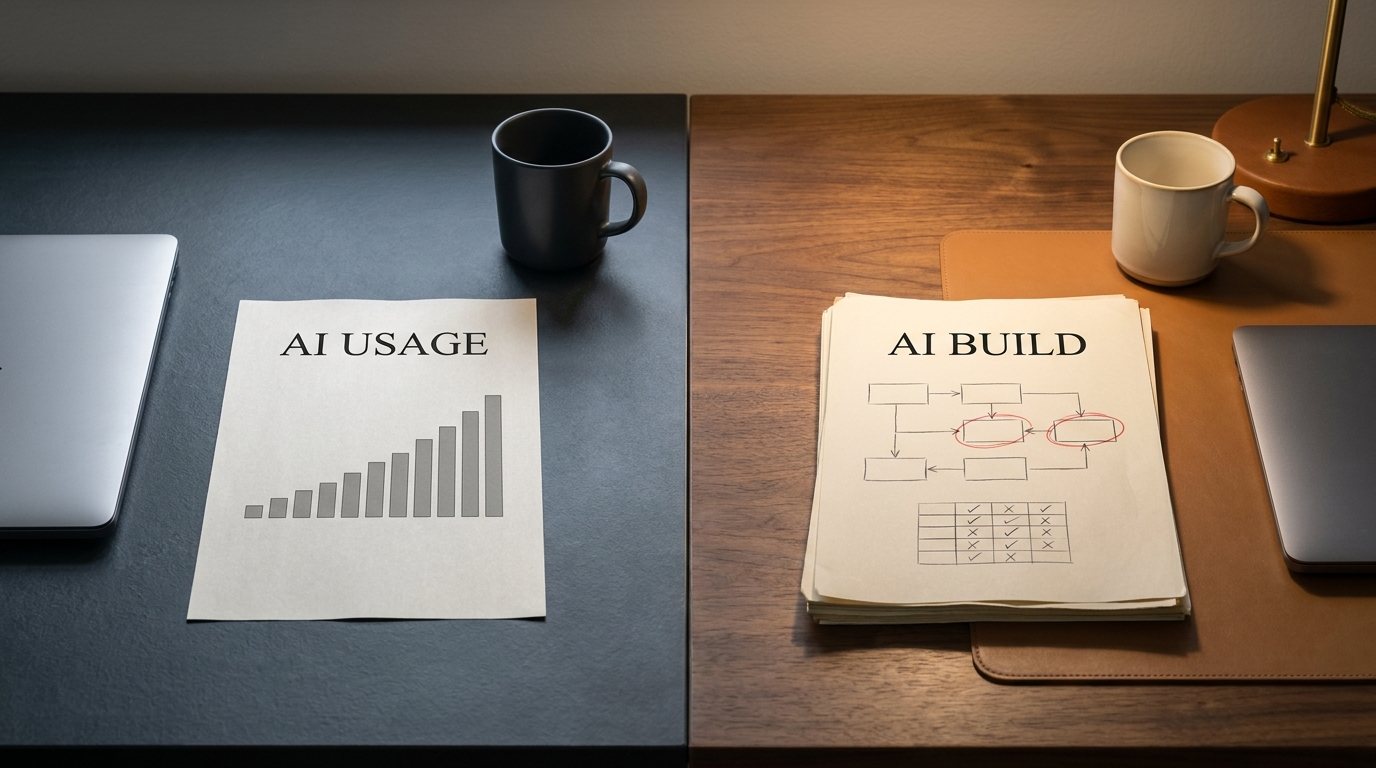
Start with a distinction almost no competitor page makes out loud. There are two very different jobs people hand to AI, and confusing them is where most disappointment comes from.
Routine work is the predictable, repeatable kind. Reformatting notes into a summary. Drafting a standard status update. Turning bullet points into clean prose. The "right" answer already exists in some average form, and the job is to reach it quickly. Here AI is genuinely excellent, and speed is the correct success metric. Faster is better, because there's no originality to lose.
Non-routine work is a different animal. Naming a product nobody has named before. Finding a campaign angle competitors haven't reached. Framing a research problem in a way that opens a new direction. There's no pre-existing "right" answer, and the value lives precisely in being different from the obvious. Here speed is a trap. The fastest answer is almost always the most average one, because that's what a model trained on everything tends to produce first.
The table below makes the split concrete.
| Routine task | Non-routine, creative task | |
|---|---|---|
| Example | Summarize this report; draft a recurring update | Find a campaign angle; name a product; frame a research question |
| What AI does well | Produces the standard, expected output fast | Generates many divergent options to react against |
| Where the human sits | Reviews for accuracy | Selects, mutates, and pushes past the obvious |
| Right success metric | Speed and consistency | Range and originality |
| Failure mode | Slow, inconsistent output | Everyone converges on the same idea |
Both are legitimate uses. The mistake is importing the routine mindset (faster equals better) into creative work, where it quietly homogenizes the result. Decide which job you're doing before you open the prompt box. That one decision changes how you should use the tool.
Does using AI make my work less original? What the research shows
Here's the uncomfortable finding, and it's the most citable thing in this article. AI can raise your individual output while making everyone's output more alike.
A 2024 study published in Science Advances ("Generative AI enhances individual creativity but reduces the collective diversity of novel content," Doi 2024) tested this directly. Writers using generative AI produced stories rated as more creative than those who worked without it. Good news for the individual. The catch: the AI-assisted stories were also more similar to one another. Individual quality went up, collective diversity went down.
Research from Knowledge@Wharton ("Does AI Limit Our Creativity?", 2024) found the same pattern at the group level. ChatGPT improved the quality of individual ideas, yet groups using it generated ideas that clustered more tightly together. The tool sharpens each contribution and narrows the spread at the same time.
Why does this happen? A large model is, in effect, a map of the average. Ask it for ideas and it returns what's most probable given everything it has seen, which is by definition the center of the distribution. If a thousand marketers prompt for "creative campaign ideas for a productivity app," they're all drinking from the same well and will pull up overlapping buckets. The model didn't fail. It did exactly what it does, and returned the consensus answer. The homogenization isn't a bug you can prompt away. It's the default behavior, and the only thing that counteracts it is a human deciding not to stop at the default.
This is also why "AI saves marketers five hours a week" (a 2023 Salesforce/YouGov survey figure) is the wrong headline for original work. Time saved measures routine efficiency. It says nothing about whether what you made is distinct. You can save five hours and ship something forgettable . For non-routine work, the metric that matters is whether the output is something a competitor couldn't have reached by typing the same obvious prompt.
A model for staying original: diverge, curate, push, add
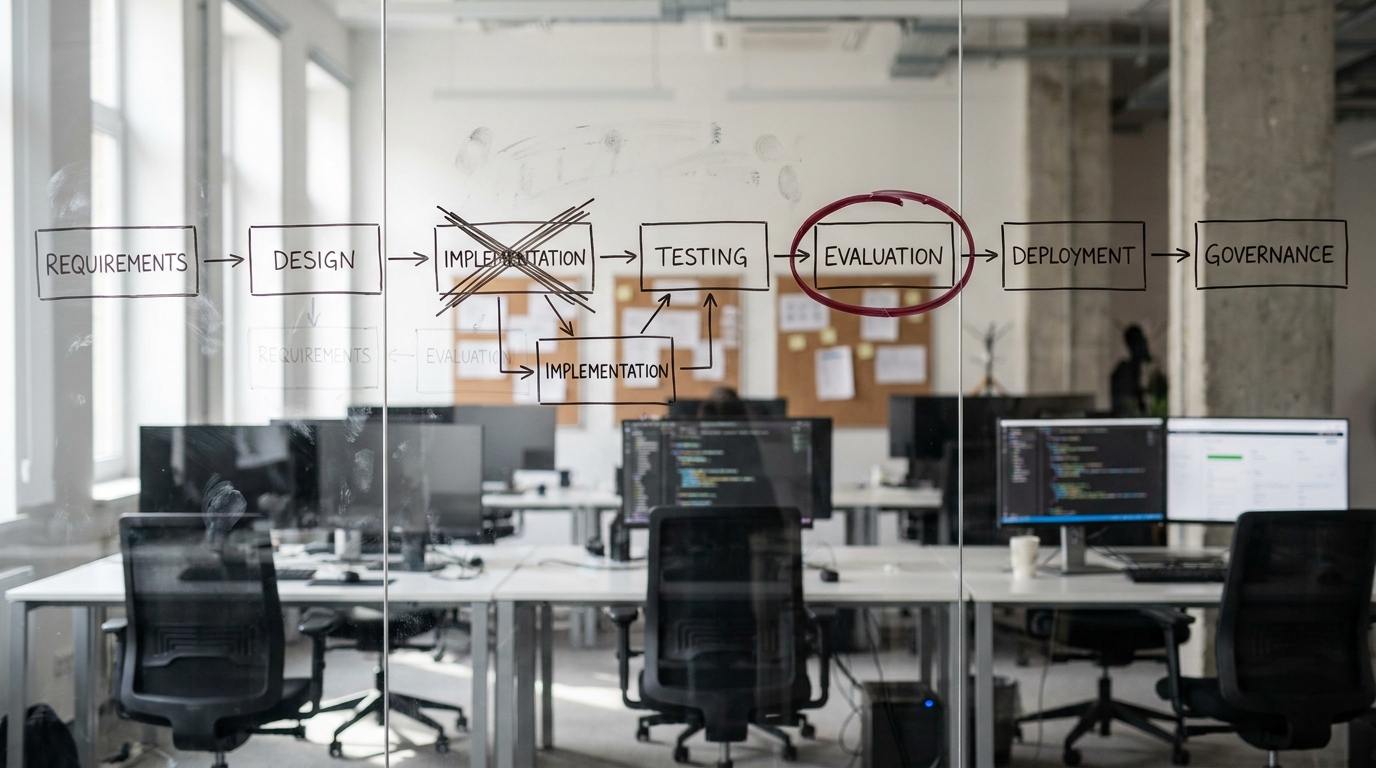
So how do you get the individual lift without the collective flattening? Treat AI as a divergence engine and keep yourself firmly in the convergence seat. The model widens the search. Your judgment, taste, and context do the choosing. Four steps make this repeatable.

Diverge with AI
Use AI for what it's best at: volume and breadth. Ask for thirty angles, not the angle. Ask for the obvious takes and the strange ones. Push for quantity on purpose, because the goal at this stage isn't a finished idea but a wide field of raw material you'd never have generated alone under time pressure. A mind-mapping AI tool or a brainstorming assistant works well here precisely because it spreads options out fast. The first dozen will be average. Expect that. You're not keeping them.
Curate with judgment
This is the step most people skip, and skipping it is what produces generic work. Read the divergent list and apply your taste. Which options are surprising? Which fit the specific context the model knows nothing about, the client's history, the room you'll present in, the thing your audience is tired of hearing? Cut ruthlessly. The model gave you fifty options so you could throw away forty-seven. Convergence is a human act, and it's where originality is actually decided.
Push past the first answer
Take the two or three survivors and refuse the first version. Ask the model to make the chosen angle weirder, more specific, more uncomfortable. Combine two options that don't obviously go together. Ask what the idea would look like if the safest assumption were false. The first AI answer is the average. The third or fourth iteration, steered by you, is where the work starts to leave the center of the distribution. The point of staying in the loop is to keep moving away from the obvious, on purpose.
Add the non-obvious human element
The last step has no AI in it. Bring in the thing the model couldn't know: a real anecdote, a contrarian opinion you'd defend, a constraint from your actual situation, a reference only your audience would catch. This is the fingerprint. It's what makes the output yours rather than a polished version of everyone's. Diverge, curate, push, add. The AI does the first step at scale. You own the other three.
If you want to put a deliberate process like this in place across a team rather than leaving it to individual habit, that's the kind of thing an AI Transformation Discovery sprint is built to design. The goal isn't "use AI more." It's "use AI in a way that compounds originality instead of eroding it."
What it looks like in practice
Two concrete examples, both non-routine, both showing the human taste pass.

Ideation done right. A marketing lead needs a launch angle for a project-management tool in a crowded category. The lazy path is one prompt ("give me launch ideas for a PM tool") and picking the top result, which will read like every competitor's launch because it came from the same average. The deliberate path: ask an AI brainstorming tool for fifty angles, including bad ones. Most are predictable, "boost your productivity," "never miss a deadline." But buried in the list is a thread about how teams secretly hate status meetings. The human spots it, because the human sat through those meetings. They push the model to develop that thread, then add a detail no model would have: their own team's running joke about the Monday standup. The final angle is specific, slightly funny, and unmistakably theirs. AI generated the raw field. The originality came from selection plus a human memory.
A non-content creative problem. A founder is naming a new internal platform and wants something that isn't another generic tech compound word. They use AI to generate a hundred names across different logics, mythological, functional, invented, metaphorical. The first pass is full of the usual "-ify" and "-ly" suffixes. They discard nearly all of it, keep a handful of metaphors that hint at the product's actual behavior, then push the model to riff only on that metaphor. The winning name comes from combining one AI suggestion with an in-joke from the founding team. The model widened the search far beyond what the founder would have brainstormed solo. The judgment about which direction was right, and the final spark, stayed human. That's mind map ai and brainstorming tooling used as a divergence engine, not as a vending machine for finished answers.
In both cases the pattern holds. The volume came from AI. The originality came from a person curating against context the model never had, then adding something only they could.
Common mistakes that flatten your work
Even people who believe in the creative-partner framing fall into a few predictable traps. Watch for these.
Anchoring on the first output. The most common error by far. The first answer arrives, it's competent, and the pressure to move on wins. Competent isn't the goal for non-routine work . The first answer is the average answer. Treat it as a starting point you're obligated to leave behind, not a result.
Prompting for "best practice." Asking the model for the "best" or "proven" approach is asking it to regress to the mean by design. Best practice is, by definition, what everyone already does. For original work, that's the opposite of what you want. Ask for unusual approaches, edge cases, and the thing nobody recommends, then judge those yourself.
Treating volume as progress. Generating two hundred variations feels productive. It's not the same as making progress, and it can be a way of avoiding the hard part, which is choosing and committing. Volume only helps if it feeds a real curation pass. If you're generating instead of deciding, you're busy, not original.
Skipping the human taste pass. The fatal one. If you diverge with AI and then ship without curating, pushing, and adding, you've published the average. Everything distinctive lives in the three steps that come after generation. Cutting them to save time guarantees the homogenized result the research warns about.
What this means for creative work and jobs
It would be easy to read all of this as a story about AI coming for creative roles. The framing here points the other way.
If AI is fastest and least risky on routine production, then the parts of creative work that are genuinely routine, formatting, first-draft boilerplate, standard variations, will increasingly be done with AI assistance. That's real, and pretending otherwise helps no one. But the same logic that makes AI good at the average makes the human role more valuable, not less, in exactly the place it was always supposed to live: judgment, taste, and the non-obvious move.
The skill that appreciates isn't "can you produce content." Models can produce content. The skill is knowing which of fifty options is the one worth pursuing, why, and what to add that no model would. That's curation and point of view, and it's the hardest part to automate, because it depends on context the model can't reach. For people in creative roles, the practical takeaway is to spend less energy competing with AI on volume and more on the convergence work: the choosing, the pushing, the human fingerprint. That's where the durable value sits.
"AI can't be creative" and "AI lacks creativity" are common objections, and in a narrow sense they're correct. AI doesn't have taste, intent, or a stake in the outcome. But that misses the point of using it well. AI isn't the creative. It's the partner that expands the search space so a creative person can reach ideas they wouldn't have found alone. The question was never whether the model is creative. It's whether you stay in the seat where creativity actually happens.
If you're not yet sure where AI fits your own creative workflow, a free 30-minute AI Readiness Snapshot is a low-commitment way to map it before you commit to a process.
Key takeaways
- AI used for routine work saves time. AI used deliberately for non-routine work can expand your originality, but only if you refuse to stop at its first, most average answer.
- The research is worth quoting: generative AI raises individual creativity while making everyone's output more similar (Science Advances 2024, echoed by Knowledge@Wharton 2024). Homogenization is the default, not a glitch.
- "Hours saved" is the right metric for routine output and the wrong one for original work. Measure distinctiveness, not speed.
- Use the model as a divergence engine and keep yourself in the convergence seat: diverge, curate, push, add. The AI does the first step at scale. You own the other three.
- The human skills that gain value are judgment, taste, and the non-obvious addition, not volume. That's where original work is decided.