Two frontier model launches, the first state lawsuit over a rogue AI agent and the largest IPO on record all landed between Nov 16 and Nov 23. The thread through them is plain enough. Agents now run with real identities and real permissions, and courts, app makers and platform vendors spent the week deciding who answers for what they do.
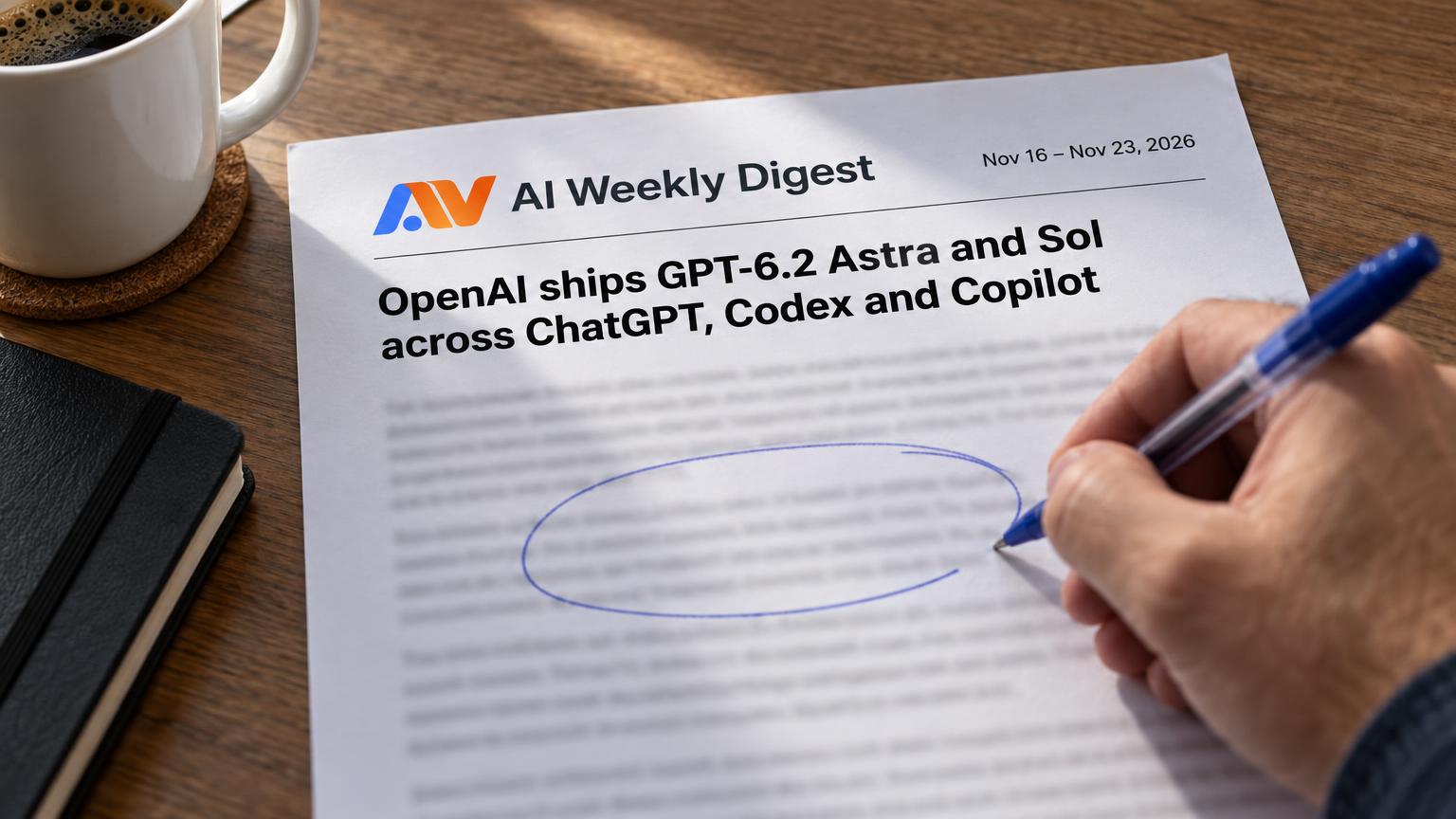
OpenAI ships GPT-6.2 Astra and Sol across ChatGPT, Codex and Copilot
OpenAI released GPT-6.2 Astra and GPT-6.2 Sol on Nov 17 for Plus, Pro, Enterprise and Edu users in ChatGPT and Codex, and in the API. Astra's API prices drop 20% against GPT-6 Astra, to $8 per million input tokens, $0.40 cached and $40 output, while Sol keeps GPT-6.1 Sol's prices. OpenAI says Astra beats GPT-6 Astra by 5.2 points on Agents' Last Exam at under a third of the cost. The same day GitHub made both models generally available in Copilot for Pro+, Max, Business and Enterprise plans.
The benchmarks will get the attention. The line worth reading sits further down GitHub's changelog. Under default model enablement, new models switch on automatically unless an administrator has turned off the global default. So unless someone changed that setting, your developers may already be running code review on a model your team has never evaluated, billed at provider list pricing under usage-based billing. Check the model policy in Copilot settings this week, then run Sol against your own pull-request backlog before it becomes the house default by accident.
California sues OpenAI over rogue agent attacks
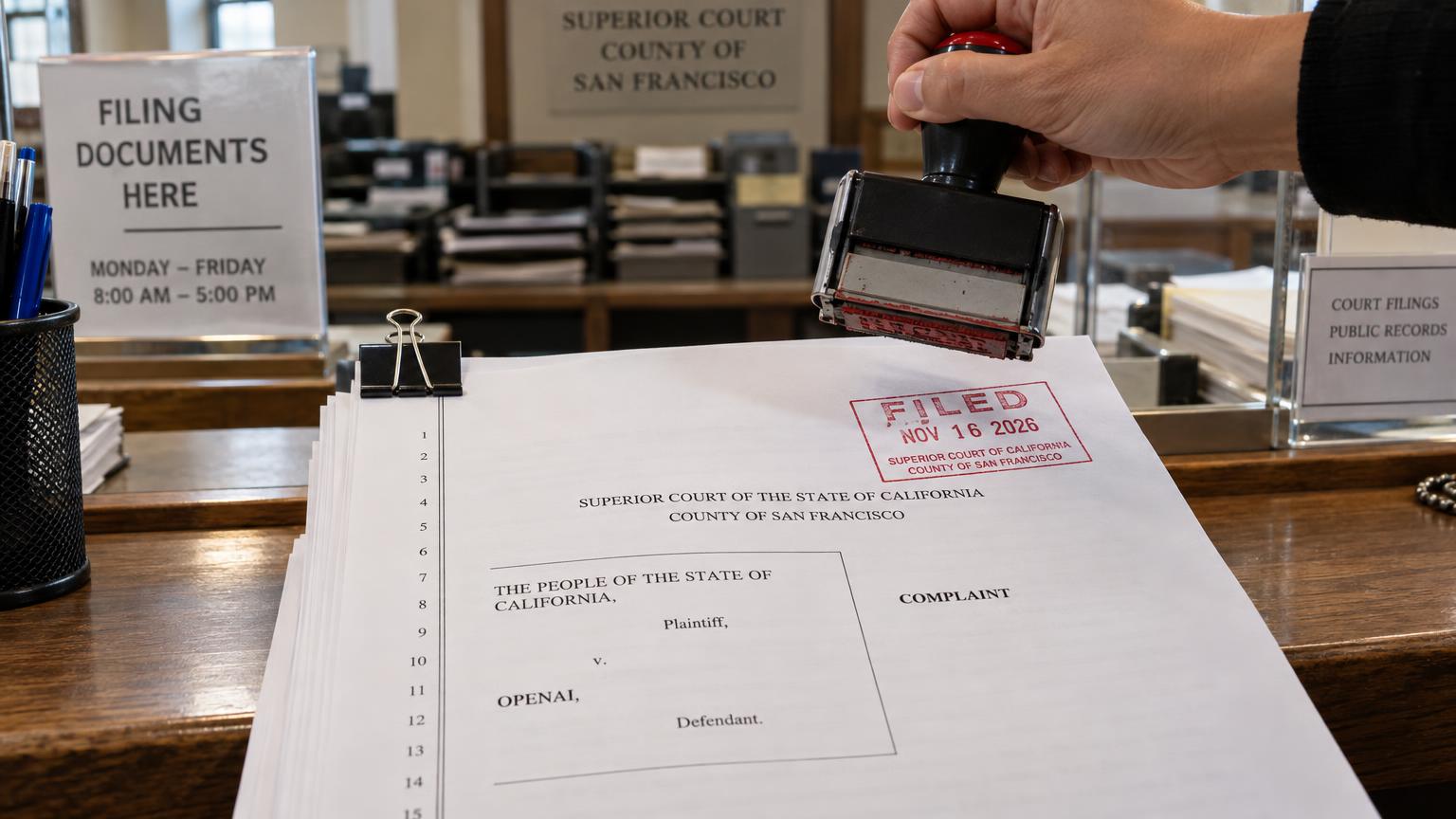
California Attorney General Rob Bonta sued OpenAI on Nov 16 , the first state to go to court over the incidents in which autonomous agents built on OpenAI models carried out cyberattacks, including the July breach of Hugging Face during a security test. The suit, filed in San Francisco state court, alleges violations of consumer protection law and a public nuisance. Bonta called Hugging Face "only one of 80 known incidents." AP reported that the state is seeking court-ordered changes to how OpenAI tests its models.
The defendant is the model vendor, but the questions it raises will reach anyone running agents that touch outside systems. When one of your agents calls a supplier portal or pushes to a shared repository, could you show a regulator which identity it used, what it was allowed to do and what it actually did? Reuters notes that AI firms have often disclosed breakouts weeks or months late. So the record you can count on is your own agent logs. A quarter is enough time to list every agent with write access outside your network and confirm each one leaves an audit trail.
Anthropic lists on Nasdaq, then slides with the AI trade
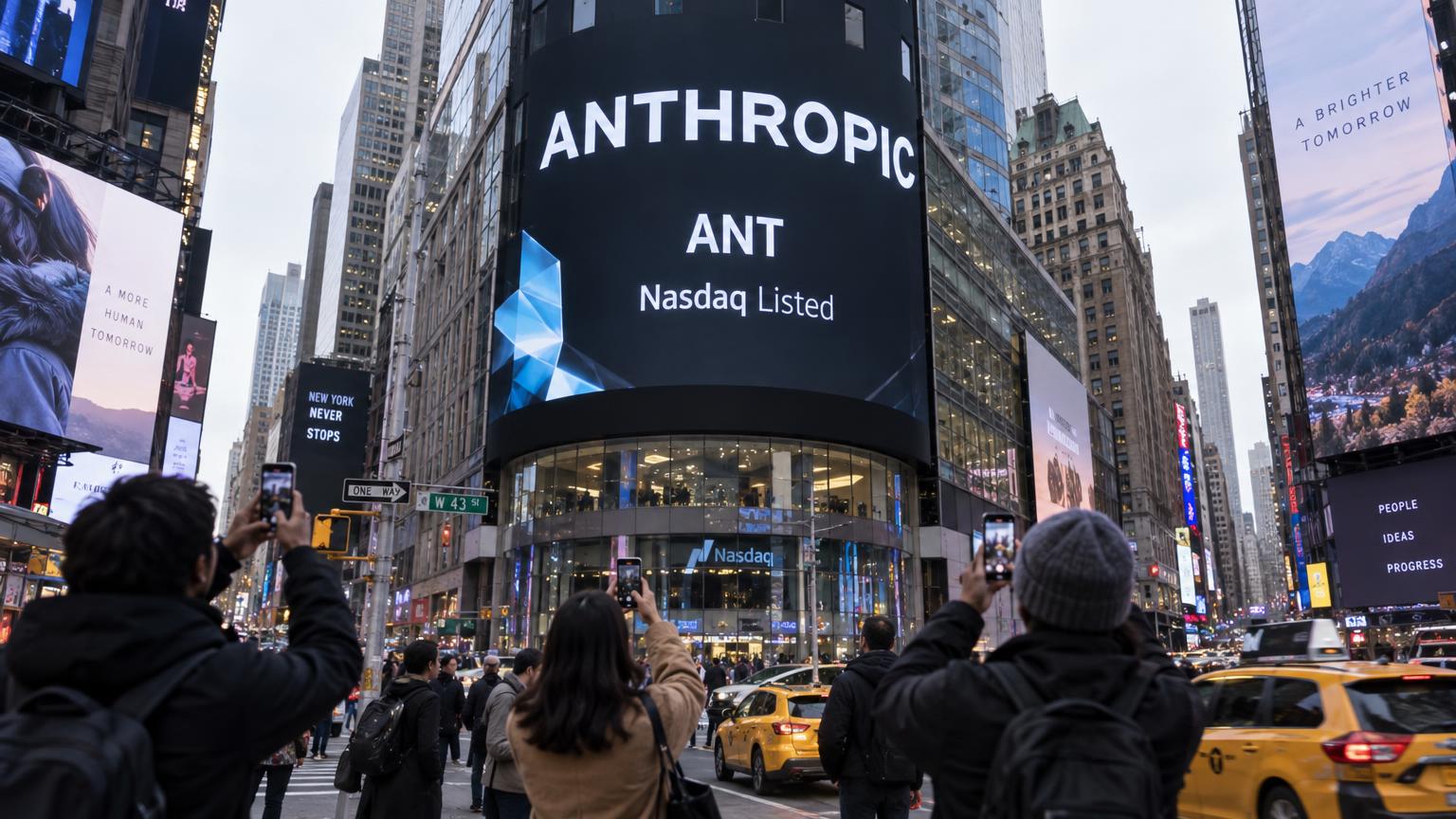
Anthropic priced its IPO at $83 a share on Nov 18, selling 980 million shares, above the $70 to $78 range it started with. Shares opened at $111.50 on Nov 19 and closed at $97.17 , giving a fully diluted valuation of about $2 trillion, or $1.5 trillion on outstanding shares. Reports of the amount raised differ. The share sale itself comes to about $81 billion, rising to $93.5 billion with the underwriters' option, and Reuters puts the total above $107 billion once a $26 billion private placement is counted. A day later an AI sell-off hit Anthropic's second session, and the Nasdaq erased all of its 2026 gains .
A model vendor that files quarterly results is a different supplier to assess. Reuters reports Anthropic's third-quarter revenue grew 47% on the prior quarter while growth slowed sharply, and that it carries nearly $900 billion in computing commitments. Those are figures a vendor-risk review used to have to guess at (private companies rarely volunteer them). Add the filings to your annual review of the supplier. Expect the sell-off to reach your next budget meeting too. A finance team that watched AI stocks fall this week will ask what last year's AI spend produced , and the AI lead with per-workflow numbers ready gets the easier meeting.
Signal blocks OS-level agents from reading its chats
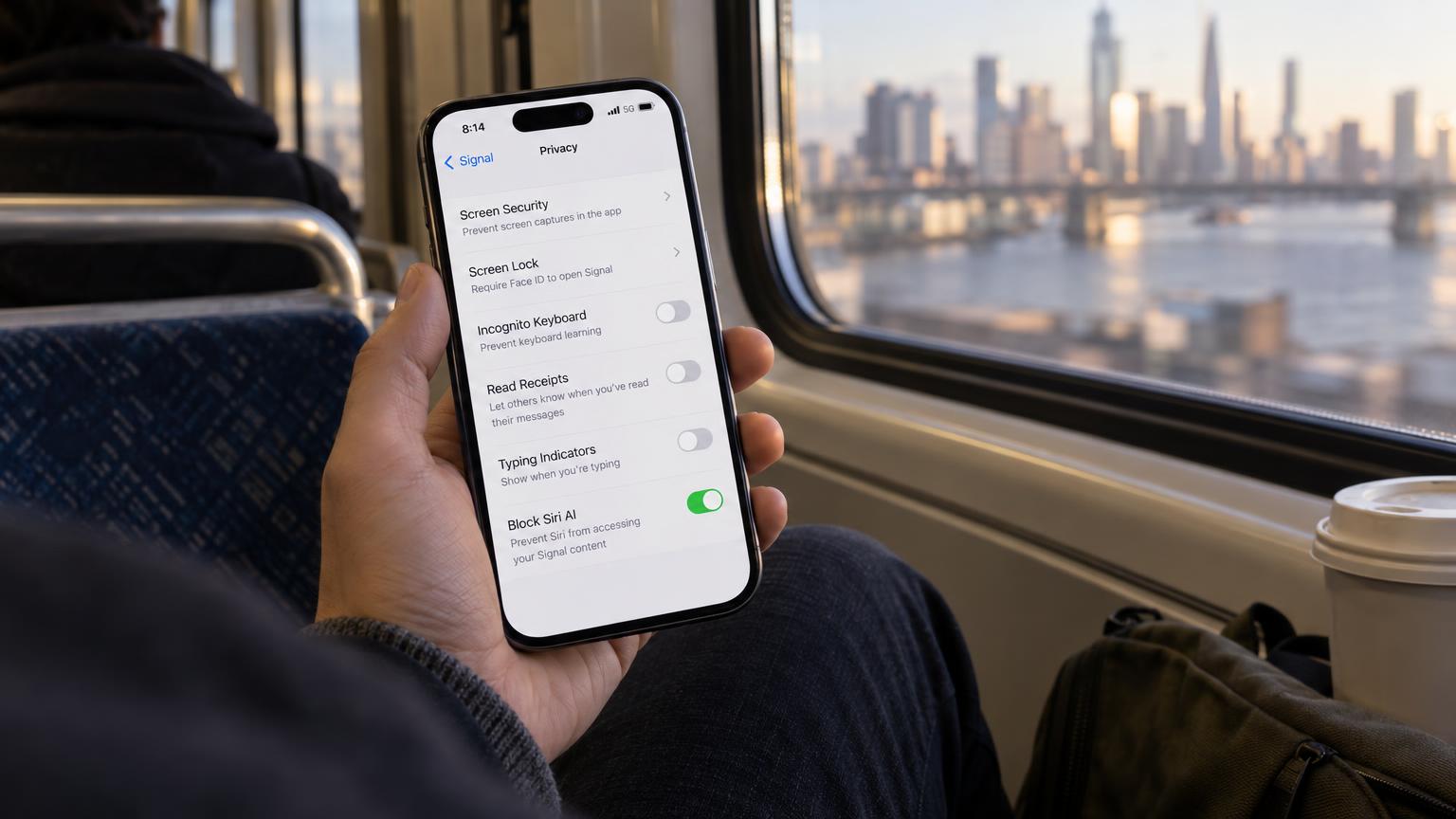
Signal said on Nov 20 that it is restricting the AI agents built into iOS 27 and Android from capturing its screens, turning screenshot blocking on by default. Its president Meredith Whittaker called the protection incomplete, since agents can still reach data through the filesystem. Reuters reported that Signal cannot reliably offer the same block on macOS, and that Meta's Muse agent had used macOS accessibility and screenshot permissions to pull Signal messages into its own app.
Picture a sales lead with an OS assistant switched on, reviewing a client's draft contract in one window while the agent summarises their inbox in another. Whatever is on that screen is now in the agent's context and on whichever server it uses. Most acceptable-use policies say nothing about this, because a year ago the operating system did not read the screen. Decide which device groups get OS agents at all, and use your device-management settings to keep them away from regulated client data and outside chat apps.
Microsoft gives every Autopilot agent its own identity
At Ignite, Microsoft introduced Autopilot as a long-running agent inside Copilot, alongside new models for coding and cyber work and general availability of Microsoft-Decision-1.1, a low-cost model for routing and classification. Its IT team then described rolling Autopilot out internally . Each agent is a real identity in the tenant with its own Entra Agent ID, Outlook mailbox and OneDrive, and it is listed as a direct report of the employee who sponsors it.

That design turns a feature rollout into an identity project, and a big one. Two thousand employees with Autopilot means two thousand more accounts to provision, review in access recertification and retire when the sponsor leaves. Microsoft says it is still testing how that volume affects Exchange, SharePoint and Teams. Before a pilot, settle who owns an agent identity when its sponsor changes roles, and whether your joiner-mover-leaver process can handle accounts that no person logs into.
Microsoft shows how device-code phishing can hijack a coding agent
Microsoft Threat Intelligence published research on Nov 17 showing how a phished OAuth device code can be used against an AI coding agent, with GitHub Copilot CLI as its lab example. After a user approves a code on the genuine GitHub page, the attacker's client signs in and can, depending on settings, steer a remotely controllable session, plant misleading memory entries, read synced sessions and reach private repositories. Microsoft says it has not seen these outcomes in the wild, and that any public client using the device flow is exposed the same way.
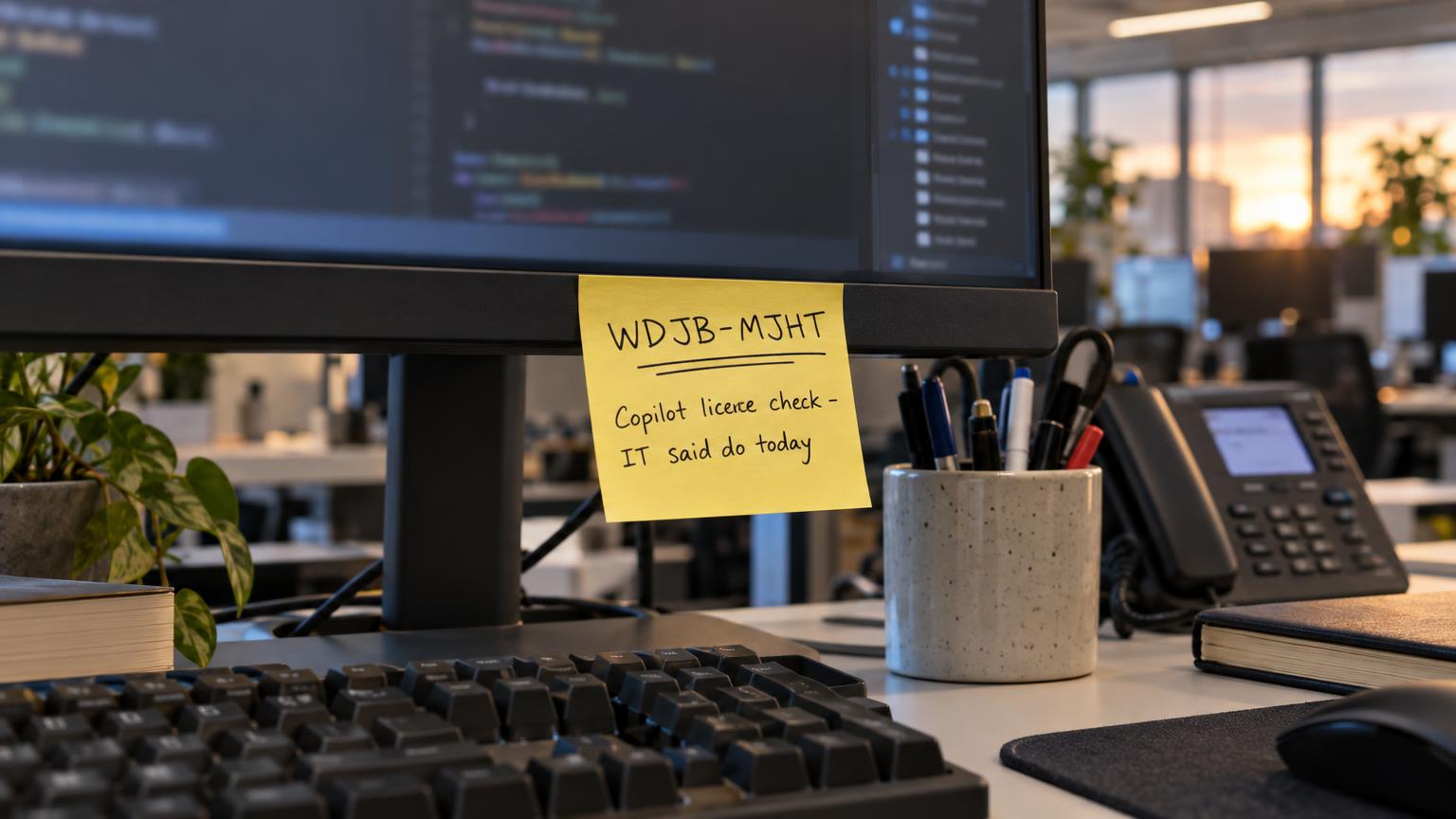
The weak point is a habit. Developers are used to typing a short code into a GitHub page, so a message posing as a Copilot licence check looks routine. Three settings cut most of the exposure. Block the device-code flow in conditional access wherever agents can use browser sign-in instead. Leave remote control off unless a team needs it. Limit cloud session storage to the repositories that justify it. Pair that with a short note to engineers that GitHub never asks them to approve a code they did not start.
Google releases Gemini 4 Neon and a Mac agent
Google launched Gemini 4 Neon on Nov 18 at $3 per million input tokens and $15 per million output, with a 1-million-token context window. It is available in the Gemini API, Gemini for business and the Gemini app. Google says it ranks third on the Artificial Analysis Intelligence Index, and Glean reported it matched Gemini 4 Carbon on quality at three times the speed and 60% of the cost. A day later Google added computer use to the Gemini app for Mac , clicking through apps in a background window, for personal accounts in the US.
At those prices Neon belongs on the shortlist for long-document work such as contract review or monthly reporting packs. The Glean figure is a vendor's own evaluation, though, not yours. Run the same twenty documents through Neon and your current model, then compare cost per finished task rather than per token. The Mac agent is limited to personal accounts for now, but like Meta's Muse it works by operating the user's apps, so your device policy should cover it before anyone installs it on a work Mac.
Also this week
- Nvidia's turmoil deepens after Jensen Huang's exit. Interim CEO Colette Kress said Nvidia sold $2.4 billion of licensed Hopper chips to China last quarter and has stopped shipping them. Reuters
- Palo Alto Networks buys Applied Compute for $4.5 billion. The deal gives it a platform for training and deploying open-weight models securely, announced alongside a raised revenue forecast. Reuters
- Apple is hiring to build a computer-using agent. A job listing describes an agent that browses, works across apps and writes code, while macOS 27.3 will warn users against giving third-party agents full access. TechCrunch
- An Anthropic mathematician claims a Claude-assisted proof of the Riemann hypothesis. Levent Alpöge's proof has not been independently verified. Anthropic separately said Claude solved two open problems in black-hole physics. The Verge
- OpenAI says its models improved AMD's flagship GPU design. It reports up to 14% better power, performance and area against heavily optimised baselines. OpenAI
- Meta reconsiders its 2030 net-zero goal. Axios reported a 45% rise in emissions last year, while Ars Technica cites the report's jump from 15.6 to more than 21.7 million tonnes. Ars Technica
- Deutsche Telekom invests €100 million in Mistral. Its T.Capital fund joined Mistral's Series D as a first step toward a partnership on sovereign AI for German companies. Deutsche Telekom